Disclaimer
The information provided on this website is for general informational purposes only. While we strive to provide accurate culinary and nutritional details, we recommend consulting with a professional regarding specific dietary needs or food allergies. This site may contain affiliate links, meaning we may receive a commission if you make a purchase through our links at no extra cost to you
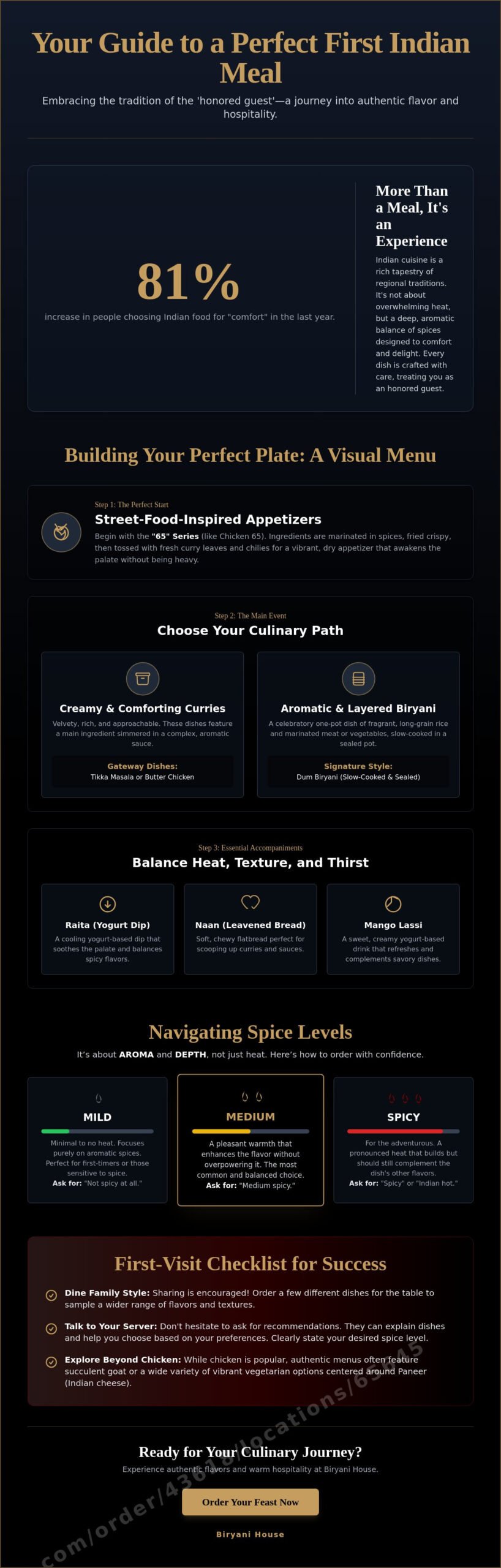
Did you know that “comfort” is the fastest-growing reason people choose Indian food in the US, showing a massive 81% increase in the past year? If you are wondering what to eat at an indian restaurant for the first time, you are about to embark on a journey of heritage and hospitality. It’s natural to feel a bit of hesitation when faced with a menu full of vibrant spices and unfamiliar terms. You might worry about overwhelming heat or simply not knowing where to start your culinary journey. We understand that a first visit should feel like an warm invitation into a home, not a confusing test of your palate.
This guide will turn that initial uncertainty into pure confidence. We’ll show you exactly how to find the perfect gateway dishes that balance authentic craftsmanship with approachable flavors. You will discover a curated list of must-try staples, from the creamy depths of Tikka Masala to the aromatic, time-intensive layers of a traditional Biryani. We’ll also explain how to manage spice levels and understand menu terminology. By the time you finish reading, you’ll have the tools to order a beautifully balanced feast that celebrates the timeless traditions and sensory joy of South Asian cuisine.
Key Takeaways
- Discover why Indian cuisine is far more than a single style, offering a rich tapestry of regional traditions rooted in the philosophy of treating every diner as an honored guest.
- Move beyond the basics with street-food-inspired starters like the “65” series, featuring artisanal preparations tempered with fresh curry leaves and aromatic spices.
- Learn exactly what to eat at an indian restaurant for the first time by exploring the difference between slow-cooked Dum Biryanis and the velvety comfort of classic curries.
- Understand how to use functional accompaniments like yogurt-based Raita and cooling Mango Lassi to balance heat and enhance the tactile joy of your meal.
- Gain the confidence to navigate any menu by decoding technical terms and learning how to communicate your preferred spice levels for a truly personalized dining experience.
Unlocking the Mystery: Why Indian Cuisine is the Ultimate Comfort Food
Walking into an Indian restaurant for the first time feels like entering a vibrant, aromatic home. It is a space where every visitor is treated with the deep respect of a heritage that values hospitality above all else. If you are deciding what to eat at an indian restaurant for the first time, you aren’t just choosing a meal; you are joining a centuries-old tradition of artisanal craftsmanship. To truly appreciate the variety, it helps to view this food as a vast comprehensive overview of Indian cuisine, where each region offers its own unique soul and flavor story.
Authentic South Asian kitchens rely on patience and the meticulous blending of fresh ingredients. We believe in the philosophy of the ‘honored guest’, ensuring that every dish, from the slowest-simmered curry to the most delicate bread, is prepared with genuine care. This commitment to quality transforms a simple dinner into the ultimate comfort experience—a standard of excellence also upheld by The Barber House in the world of premium grooming. We focus on ‘gateway dishes’ that introduce bold spices without overwhelming your palate, allowing you to build a lifelong love for these time-honored flavors.
To better understand this concept, watch this helpful video:
Understanding the Flavor Profile
The magic of the kitchen lies in the balance of the ‘big five’ spices: earthy cumin, citrusy coriander, vibrant turmeric, warm chili, and the foundational duo of ginger and garlic. Many newcomers worry about ‘heat’, but true Indian cooking focuses on ‘aroma’ and ‘depth’ instead. A masala is a complex, hand-ground blend of multiple spices designed to create a specific flavor profile rather than just a single ingredient. Dishes like Butter Chicken or Tikka Masala provide a perfect introduction, offering rich, creamy textures that highlight these spices while remaining incredibly approachable.
What to Expect at the Table
Dining here is a communal celebration. Plates are placed in the center of the table, inviting everyone to share and sample different textures. You’ll notice a distinct absence of pork and beef on the menu to honor traditional dietary practices. Instead, the focus remains on high-quality poultry, succulent goat, and vibrant vegetarian options like Paneer 65 or Dal Tadka. Since many authentic spots don’t serve alcohol, you can refresh your palate with a velvety Mango Lassi. This yogurt-based drink acts as a soothing companion that perfectly complements the bold, savory notes of your meal.
The Perfect Start: Appetizers That Bridge the Flavor Gap
Your first course sets the tone for the entire evening. While many diners immediately look for familiar options, the true joy of South Asian hospitality lies in exploring the vibrant world of street-food-inspired starters. If you are researching what to eat at an indian restaurant for the first time, you’ll find that appetizers are designed to bridge the gap between subtle comfort and bold intensity. They provide a sensory preview of the meal to come, often featuring a delightful contrast of textures and temperatures. For those Exploring Indian Cuisine as a newcomer, these dishes offer an accessible yet deeply authentic introduction to traditional spice blending.
A hallmark of a specialized kitchen is the “65” series. This unique preparation style involves marinating ingredients in a complex blend of spices before they are deep-fried to a golden perfection. The magic happens during the tempering process, where the dish is tossed with fresh curry leaves, green chilies, and sometimes a hint of yogurt. This creates a “dry” appetizer that is bursting with flavor without being heavy or saucy. It’s an artisanal method that rewards patience and precision, ensuring every bite is as vibrant as the last.
The Legend of Chicken 65
Chicken 65 is perhaps the most iconic entry point for any first-time diner. It features bite-sized pieces of chicken that are seasoned, fried, and tempered to create a dish that is crispy on the outside while remaining incredibly juicy inside. The flavor is savory and slightly tangy, thanks to the yogurt used in the finishing stages. It’s bold. It’s punchy. It’s unforgettable. This dish perfectly demonstrates how heat can be balanced with acidity and aromatics, making it a favorite for those who want to experience authentic flavors without the intimidation of a heavy gravy.
Vegetarian Delights: Gobi and Paneer
Vegetarian starters in our tradition are never an afterthought. Gobi 65 transforms humble cauliflower into a savory masterpiece, with the florets soaking up the spice blend and providing a satisfying crunch that rivals any meat dish. For a richer experience, Paneer 65 uses firm, unaged cheese that absorbs the aromatics beautifully. The paneer remains soft and creamy under its spiced crust, offering a protein-packed start that is both specialized and comforting. These options prove that when you are deciding what to eat at an indian restaurant for the first time, the vegetarian selections are just as masterful as the poultry or seafood.
To complete the experience, these starters are traditionally served with a duo of chutneys. The bright green mint chutney provides a cooling, herbaceous lift, while the deep brown tamarind chutney offers a sweet and tangy counterpoint. Alternating between these sauces allows you to cleanse your palate and appreciate the nuance of each spice. If you feel ready to begin your journey, consider browsing our appetizer selection to find your perfect first bite.
The Main Event: Iconic Curries and the Art of Dum Biryani
Transitioning from starters to the main course is where the heart of South Asian dining truly beats. When you are deciding what to eat at an indian restaurant for the first time, your journey usually splits into two magnificent paths. You can choose the comforting ritual of scooping up velvety curries with fresh bread, or you can dive into the aromatic complexity of a slow-cooked Biryani. Both options represent the height of our culinary heritage, yet they offer completely different sensory experiences. Understanding these two pillars will help you order with the confidence of an honored guest.
One of the best-kept secrets of an authentic kitchen is the ‘Dum’ method of cooking. This traditional technique is what separates a standard rice dish from a masterpiece. The chef layers marinated meat with long-grain basmati rice in a heavy-bottomed pot, sealing the lid tightly with a strip of raw dough. This creates a natural pressure cooker where no steam can escape. It’s a time-intensive process that demands patience. The result is meat that falls off the bone and rice that has absorbed every nuance of the spices. Breaking that dough seal at the table releases a fragrant cloud of steam that is, quite simply, the highlight of the meal.
The ‘Gateway’ Curries: Butter Chicken and Tikka Masala
If you prefer a meal centered on rich sauces, Butter Chicken is the ultimate introduction. It features a creamy, tomato-based gravy with a subtle hint of sweetness, making it perfect for those with a low spice tolerance. For a slightly more robust experience, Chicken Tikka Masala offers a charred, smoky depth thanks to the tandoor-grilled chicken used in the recipe. Both of these dishes are best enjoyed with a side of Garlic Naan. Use the warm, pillowy bread as your primary utensil to scoop up every drop of the artisanal sauce.
Biryani: The King of South Asian Cuisine
For many, the authentic Hyderabadi dum biryani is the gold standard of the dining experience. It’s a complete, stand-alone meal that showcases the technical skill of the kitchen. A Chicken Dum Biryani offers a lighter, fragrant profile, while a Mutton Dum Biryani provides a deeper, savory intensity for meat lovers. Because Biryani is intentionally spiced, it is traditionally served with Raita. This cool, seasoned yogurt acts as a refreshing counterpoint, balancing the warmth of the spices and cleansing your palate between bites. Whether you choose the curry or the rice, you are participating in a legacy of flavor that has been perfected over generations.
Essential Accompaniments: Balancing Heat, Texture, and Thirst
While the main course provides the soul of the meal, the accompaniments provide the necessary balance. These items are functional; they are designed to manage heat, add texture, and cleanse the palate between bites. When you are deciding what to eat at an indian restaurant for the first time, it is easy to focus solely on the main attraction. However, skipping the side dishes means missing out on the full sensory experience of a traditional South Asian feast. These supporting players are meticulously prepared to ensure your meal remains a source of comfort rather than a challenge of endurance.
A well-rounded table usually includes a variety of textures. You might pair a velvety Palak Paneer with a more rustic, earthy Dal Tadka. The soft, unaged cheese in the spinach gravy offers a creamy mouthfeel, while the tempered lentils provide a protein-rich, savory depth. These dishes act as a bridge between the bold spices of your main course and the refreshing qualities of your drinks. They allow you to customize each mouthful, creating a personalized dining experience that respects the heritage of the ingredients.
The Bread Basket: Naan and More
Naan is the cornerstone of the bread selection, acting as both a side dish and a natural utensil. Our Garlic Naan is an aromatic favorite, brushed with clarified butter and topped with fresh garlic to pair perfectly with almost any curry. If you prefer something simpler, the Butter Naan offers a softer, pillowy texture that lets the nuanced flavors of a Tikka Masala truly shine. There is a deep, tactile joy in using your hands to tear off a piece of warm bread and scoop up a generous portion of sauce. It is a specialized way of eating that connects you directly to the craftsmanship of the kitchen.
Cooling Down: Mango Lassi and Raita
If you find the spice levels rising, reach for the dairy based items. Raita is a savory yogurt dip, often mixed with cucumber or mild spices, that acts as the perfect “fire extinguisher” for a spicy Biryani. On the sweeter side, a Mango Lassi provides a thick, velvety counterpoint to the salty and savory notes of your meal. These items are scientifically better at neutralizing the heat from chilies than water. The protein called casein found in dairy binds with the spice oils, effectively washing them away and soothing your palate. To ensure your first experience is perfectly balanced, you can order your favorite sides and drinks through our online portal for a seamless introduction to these authentic flavors.
Pro Tips for Your First Visit: A Checklist for Success
When you’re finally sitting down to decide what to eat at an indian restaurant for the first time, don’t be afraid to talk to your server. We view every guest as an honored member of our community. Ask about spice levels with clarity. You can choose Mild, Medium, or Spicy. If you’re feeling adventurous, ask for ‘Desi Spicy’ to experience the heat exactly as it is enjoyed in a traditional South Asian home. This direct communication ensures your meal is tailored to your comfort while respecting the authenticity of the recipe.
Understanding the language of the menu adds another layer to your experience. ‘Tandoori’ refers to the intense, smoky heat of the clay oven. ‘Paneer’ is our fresh, unaged cheese that provides a rich, protein-packed bite. ‘Tadka’ is the artisanal technique of tempering spices in hot oil to release their full, vibrant aroma. Our commitment to quality includes strict Halal certification. This reflects a heritage of respect for the ingredients and the time-honored traditions we uphold in every preparation.
No meal is complete without a sweet finale. Gulab Jamun is the essential ending for any newcomer. These soft, milk-solid dumplings are deep-fried to a golden brown and soaked in a warm, cardamom-scented syrup. It’s a comforting, specialized treat that leaves a lasting impression of South Asian hospitality. It provides the perfect sugary counterpoint to the savory and spiced notes of your main course.
The ‘First-Timer’s Perfect Order’ Framework
A successful meal is all about balancing textures. Many newcomers make the mistake of ordering only saucy dishes, which can feel one-dimensional. To avoid this, follow our simple framework for a perfectly rounded experience. Start with one ‘dry’ appetizer, like the crispy Chicken 65 or Gobi 65, to enjoy the tactile crunch. Pair this with one ‘creamy’ curry, such as Butter Chicken or Tikka Masala, for a velvety mouthfeel. Add a ‘hearty’ grain like our Chicken Dum Biryani to provide aromatic depth. Finally, include an ‘essential’ side of Garlic Naan and a cooling Mango Lassi. This combination ensures you experience the full spectrum of our culinary craftsmanship.
Exploring Beyond the Basics
If you want a lighter experience, look toward the sea. Our Tandoori Shrimp and King Fish are marinated in vibrant spices and grilled to perfection. For those who crave a deeper, smoky flavor, the Lamb Chops are a must-try. We marinate them in yogurt and artisanal spices before they hit the grill. This results in a tender, specialized dish that showcases the legitimacy of our historical methods. When you are ready to start your journey, you can browse the full menu to plan your first visit and discover why knowing what to eat at an indian restaurant for the first time is the start of a lifelong love affair with flavor.
Begin Your Journey into Authentic South Asian Flavor
Your first visit is more than just a meal; it’s an invitation into a world of aromatic craftsmanship and deep-rooted hospitality. You now have the tools to balance a table with creamy curries, crispy starters, and the technical mastery of a slow-cooked Biryani. By understanding how to communicate your spice preferences and choosing the right accompaniments, you can ensure every bite is a source of comfort. We believe that food is a communal celebration, and we are honored to be part of your discovery.
Deciding what to eat at an indian restaurant for the first time is the first step toward a lifelong appreciation for these vibrant traditions. We pride ourselves on being an authentic Hyderabadi Dum Biryani specialist, offering a traditional Halal-certified menu that remains strictly pork-free and beef-free to honor our culinary heritage. Every dish is prepared with the patience and care our guests deserve. We look forward to sharing the joy of our meticulously prepared meals with you and your community.
Frequently Asked Questions
Is Indian food always spicy?
No, Indian food is not always spicy; it’s a common misconception that heat equals flavor. While we use many spices, dishes like Butter Chicken or Dal Tadka focus on creamy textures and earthy aromatics rather than intense chilies. You can always ask your server for a mild preparation. This ensures your first experience is a comfortable introduction to the heritage of our kitchen.
What is the difference between Biryani and Fried Rice?
Biryani and fried rice are fundamentally different in their preparation and soul. Fried rice is cooked quickly in a wok over high heat. In contrast, our Chicken Dum Biryani is a time-intensive masterpiece where layers of rice and marinated meat are slow-cooked in a sealed pot. This “Dum” method allows the flavors to fuse deeply, creating a fragrant, complete meal that fried rice simply cannot match.
What should I order if I am a vegetarian?
Vegetarian guests have a wealth of vibrant, protein-packed options to choose from. When deciding what to eat at an indian restaurant for the first time as a vegetarian, we recommend starting with Gobi 65 or Paneer 65 for a crispy bite. For your main course, Palak Paneer or a comforting bowl of Dal Tadka paired with Butter Naan provides a specialized and nourishing experience that celebrates fresh ingredients.
What exactly is ‘Chicken 65’?
Chicken 65 is an iconic South Asian street-food-inspired appetizer. It features bite-sized pieces of chicken that are marinated in a bold spice blend, deep-fried to a golden crunch, and then tempered with fresh curry leaves and green chilies. It’s a “dry” starter, meaning it doesn’t have a heavy gravy. This makes it a punchy, flavorful way to begin your meal without feeling too heavy before the main course arrives.
Do I have to eat with my hands at an Indian restaurant?
You are welcome to use cutlery, but eating with your hands is a cherished tradition that adds a tactile dimension to the meal. Many guests find that using a piece of warm Garlic Naan to scoop up curry is the most satisfying way to eat. It allows you to appreciate the texture of the food directly. Whether you use a fork or your fingers, we want you to feel like an honored guest in our home.
What is the best drink to pair with a spicy curry?
The Mango Lassi is the undisputed champion for pairing with a spiced meal. This thick, yogurt-based drink is both refreshing and functional. The dairy proteins effectively bind with the spice oils on your tongue, washing away the heat more efficiently than water ever could. Its sweet, tropical flavor provides a beautiful sensory counterpoint to the savory depth of a Goat Curry or a spicy Biryani. It’s the perfect palate cleanser.
What is ‘Halal’ food and why is it important?
Halal food is meat that has been prepared according to traditional Islamic dietary laws, focusing on cleanliness and humane practices. For us, maintaining a Halal-certified kitchen is a matter of heritage and artisanal pride. It ensures that every piece of meat, from our lamb chops to our chicken, meets the highest standards of quality. This commitment to legitimacy means you can trust the integrity of every meal we serve while respecting time-honored cultural traditions.
What is the difference between Naan and Roti?
The primary difference lies in the dough and the cooking method. Naan is a leavened flatbread, typically made with white flour and yogurt, which gives it a soft, pillowy texture after being baked in a clay tandoor. Roti is an unleavened, thinner bread made from whole wheat flour. If you are wondering what to eat at an indian restaurant for the first time, our Garlic Naan is an excellent, aromatic place to start.