Disclaimer
The information provided on this website is for general informational purposes only. While we strive to provide accurate culinary and nutritional details, we recommend consulting with a professional regarding specific dietary needs or food allergies. This site may contain affiliate links, meaning we may receive a commission if you make a purchase through our links at no extra cost to you
Have you ever sat down for a meal expecting a rich, tender feast only to be met with stringy meat and a sauce that tastes like generic supermarket powder? When you begin searching for where to find authentic goat curry near me, you aren’t just looking for a quick meal. You’re searching for a connection to a rich culinary heritage and the comfort of a dish prepared with genuine care. We understand that finding a restaurant that prioritizes traditional methods over shortcuts can feel like a challenge in a world of fast-paced dining.
We agree that you deserve more than an oily, shallow experience; you deserve the deep, layered flavors that only come from artisanal spice blends and hours of patient simmering. This guide will help you discover the secrets of authentic, slow-cooked goat curry and teach you how to identify a truly traditional South Asian dining experience. We’ll walk you through the sensory markers of quality, from the aromatic depth of hand-ground spices to the succulent texture of perfectly prepared heritage recipes. By the end, you’ll know exactly how to find a meal that feels like an invitation into a master chef’s own home.
Key Takeaways
- Learn why bone-in meat is the essential foundation for a rich, marrow-infused gravy that defines a true heritage dish.
- Discover how to use the “Tender Test” and “Oil Separation” marker when searching for where to find authentic goat curry near me to ensure you’re getting a masterfully prepared meal.
- Understand the time-honored “Bhuna” method and why a patient, four-hour slow-simmering process is non-negotiable for depth of flavor.
- Identify the perfect traditional pairings, like warm Garlic Naan and aromatic Basmati rice, designed to elevate the sensory experience of every bite.
- Explore how a commitment to culinary purity and traditional Hyderabadi methods creates a dining experience that honors South Asian history.
Understanding the Essence of Authentic Goat Curry
Authentic Goat curry isn’t just a simple stew; it’s a slow-cooked masterpiece that honors centuries of South Asian culinary history. When you search for where to find authentic goat curry near me, you aren’t just looking for food. You’re looking for that specific, time-intensive preparation that transforms lean cuts into succulent morsels. It’s a process defined by patience and respect for the ingredients. The steady, low heat coaxes deep, complex flavors from the heart of every spice, creating a dish that feels like a warm welcome into a traditional home.
In Hyderabadi and North Indian traditions, this dish serves as a centerpiece of hospitality and celebration. The aroma of whole spices toasted in hot oil creates a sensory experience that pre-packaged powders simply can’t replicate. You’ll catch the sharp warmth of cloves and the sweet floral notes of green cardamom long before the plate ever reaches your table. This craftsmanship treats every diner as an honored guest, offering a meal that nourishes both the body and the spirit.
To better understand the dedication required for these traditional flavors, watch this helpful video:
The Importance of Bone-In Meat
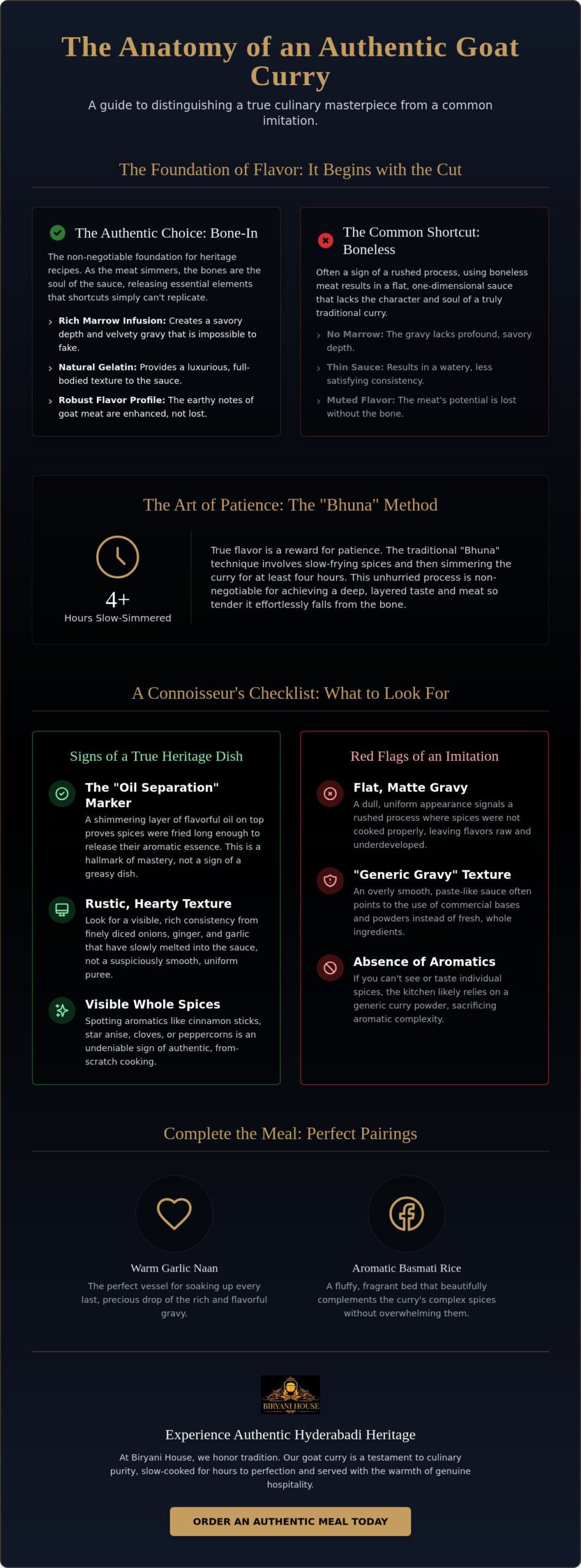
Traditional recipes always favor bone-in cuts for a very specific reason. As the meat simmers for several hours, the bones release natural gelatin and rich marrow into the gravy. This creates a velvety texture and a savory depth of flavor that boneless meat simply lacks. While lamb is often soft and fatty, goat meat is leaner and offers a more robust, earthy profile that stands up beautifully to intense, aromatic spices. It’s a tactile experience, too. The meat should pull away from the bone with the slightest pressure of a fork. Authentic recipes never use boneless meat because the marrow is considered the soul of the sauce.
Regional Variations in Spice Profiles
The word “curry” often acts as a broad label for a diverse array of regional techniques and histories. In some areas, you’ll find fiery heat and sharp vinegar notes. Hyderabadi styles, however, focus on aromatic depth using whole cinnamon sticks, star anise, and black peppercorns. These whole spices release their essential oils slowly during the long 3-4 hour simmering process. This ensures the heat doesn’t overwhelm the delicate sweetness of the meat but rather enhances it. Discovering a kitchen that respects these specific regional profiles is the first step toward a truly heritage-focused meal. It’s about finding that perfect balance where every spice has a voice but none shout over the others.
What to Look for When Searching for Goat Curry Near Me
Finding the right spot requires a discerning eye and a bit of culinary intuition. When you’re deciding where to find authentic goat curry near me, look beyond the menu description. A true heritage dish reveals itself through specific technical markers that speak to the chef’s patience and respect for tradition. We treat every plate as a signature of our house, ensuring that the hallmarks of quality are visible from the moment the dish arrives at your table.
One of the most reliable signs of quality is the “Oil Separation” marker. In a properly prepared dish, you’ll see a thin, shimmering layer of oil on top of the gravy. This isn’t a sign of a greasy meal; rather, it indicates that the spices were fried long enough to release their essential oils and fully integrate with the base. If a sauce is a flat, matte color, it often means the cooking process was rushed, leaving the spices raw and the flavors shallow.
Texture tells a story too. Authentic goat curry should have a visible, rustic consistency from finely diced onions and ginger that have slowly melted into the sauce. Avoid the “Generic Gravy” found in many commercial kitchens, which often looks like a smooth, orange puree. You should also spot whole spices like cloves, cinnamon sticks, or peppercorns. This presence of whole aromatics is a clear sign of scratch-cooking, much like the steps outlined in a traditional goat curry recipe.
Tenderness and Texture: The Slow-Cooked Standard
Goat meat is naturally lean and requires a steady hand to prepare correctly. To achieve the perfect “Tender Test” result, where the meat falls off the bone without becoming mushy, a chef must allow the connective tissues to break down slowly over several hours. Some restaurants use pressure cookers to cheat this time-intensive process, but the result is often stringy or dry meat that lacks the deep infusion of spice. A well-reduced sauce should feel velvety on the tongue, coating the meat with a rich, concentrated flavor. If you’re craving this level of craftsmanship, you can order our slow-simmered Goat Curry to experience the difference.
Aromatic Complexity vs. Simple Heat
True culinary art avoids the trap of being just “spicy.” Instead, it offers a layered profile where you can taste the distinct notes of every ingredient. You should first experience the floral aromatics of cardamom, followed by the warmth of cumin, and finally a clean, savory finish. When exploring where to find authentic goat curry near me, remember that the best experiences focus on this balance of spice and soul. This complexity is only possible when using fresh ginger and garlic pastes made in the kitchen daily. If the heat hits the back of your throat instantly without any other flavor, it’s a sign that generic powders were used to mask a lack of depth.
The Craftsmanship Behind Traditional Indian and Pakistani Curries
The journey to finding a truly heritage-focused meal ends when you step into a kitchen that respects the clock. When you’re searching for where to find authentic goat curry near me, you’re actually looking for the labor of love that happens behind the scenes. This dish, originating from the Indian subcontinent, isn’t something that can be rushed in thirty minutes. It requires a dedicated 3-4 hour slow-simmering process. We believe that small-batch cooking is the only way to preserve the integrity of the meat. Unlike mass-produced restaurant bases that taste the same across every dish, small-batch preparation allows the chef to adjust the seasoning to the specific texture of the goat.
Consistency is key to this transformation. Traditional kitchens use “Degs,” which are heavy-bottomed pots designed to maintain a steady, gentle heat. This prevents the delicate spices from scorching while the meat gradually softens. It’s this commitment to equipment and time that separates a standard meal from a cultural experience. Every simmered pot is a testament to the patience required to treat our guests to something truly special.
The Secret is in the Bhuna Process
“Bhuna” is the heartbeat of South Asian cooking. It’s the art of frying spices in hot oil until they release their essential oils and the moisture from the onions has evaporated. This step is vital. It prevents that sharp, bitter “raw spice” taste often found in inferior curries. You’ll know it’s done right when you see the oil begin to glisten and separate from the thick, aromatic paste. This visual cue tells the chef that the flavors have reached their peak intensity, creating a base that’s rich, dark, and incredibly savory.
Freshly Ground Spices vs. Commercial Blends
The difference between a vibrant curry and a dull one often comes down to the mortar and pestle. Authentic kitchens toast whole seeds and grind their own masalas daily. Freshly ground cumin and coriander have a citrusy, bright punch that pre-packaged powders simply lose over time. We adjust these spice ratios based on the specific cut of meat to ensure the earthy profile of the goat is never overshadowed. This artisanal approach ensures that every bite offers a fresh, intense flavor profile that lingers on the palate. If you want to taste this level of dedication, you can explore our heritage-focused menu. When you finally discover where to find authentic goat curry near me, these sensory details will be the first things you notice.
Completing the Meal: Perfect Pairings for Your Curry
A true heritage meal is more than just a single dish; it’s a carefully curated symphony of flavors and textures. When you finally discover where to find authentic goat curry near me, the experience isn’t complete until you choose the right companions for that rich, slow-cooked gravy. The goal is to balance the earthy intensity of the goat with elements that provide contrast, whether through the char of a tandoor-baked bread or the cooling touch of a traditional yogurt-based side. We treat every meal as a celebration of hospitality, ensuring every element on your table works in harmony.
The Role of Fresh Naan and Rice
There is no substitute for bread that has been slapped against the side of a scorching clay tandoor. Unlike standard flatbreads that can feel heavy or doughy, our Garlic Naan and Butter Naan offer a delicate balance of crisp edges and pillowy centers. This texture is essential for soaking up every drop of the spiced, marrow-infused sauce we discussed earlier. Similarly, a bed of long-grain Basmati rice provides a neutral, aromatic base that allows the complex spice profile of the curry to shine. Each grain should be distinct and fragrant, acting as a canvas for the vibrant colors and oils of the dish. You can explore our full menu of fresh breads and sides to find your perfect match.
Cooling Accompaniments: Raita and Lassi
Even with the most expertly balanced spice profile, your palate occasionally needs a moment of refreshment. This is where cooling sides like Raita become indispensable. This yogurt-based accompaniment acts as a gentle palate cleanser that resets your taste buds for the next savory bite. It provides a creamy counterpoint to the robust heat of the bhuna-style sauce, allowing the subtler notes of cardamom and clove to re-emerge. To finish the meal, a Mango Lassi offers a sweet and tart transition that rounds out the dining experience. The velvety smoothness of the mango provides a refreshing contrast to the savory depth of the goat. For those with a sweet tooth, we always recommend following your curry with Gulab Jamun, those iconic syrup-soaked milk solids that provide a final, comforting note of hospitality. If you’re ready to experience this full heritage spread, order our authentic Goat Curry meal today.
Experience Authentic Heritage at Biryani House
When you’ve spent time searching for where to find authentic goat curry near me, the journey eventually leads you to our doors. Biryani House isn’t just a place to eat; it’s a sanctuary for those who crave the genuine, unhurried flavors of Hyderabadi and South Asian traditions. We take immense pride in being an institution that honors the history of our craft. Every guest who walks through our doors is treated as an honored visitor in our home. We maintain a strict environment of culinary purity by excluding pork, beef, and alcohol from our kitchen. This commitment ensures that the integrity of our traditional recipes remains untouched, offering a safe and authentic space for our community to gather and share a meticulously prepared meal.
The personality of our kitchen is that of a passionate host. We respect the historical methods that have been passed down through generations, finding fulfillment in the satisfaction of our guests. There’s a distinct comfort in knowing your food has been prepared with patience and artisanal quality. We don’t just serve meals; we provide a gateway to experiencing time-honored flavors that feel both specialized and deeply comforting. This is the standard we set for every dish that leaves our kitchen.
Our Commitment to Traditional Methods
Our kitchen operates on the principle that quality cannot be rushed. We prepare our Goat Curry with the same meticulous patience and artisanal care as our signature Mutton Dum Biryani. We don’t believe in shortcuts. Instead, we rely on premium ingredients and hand-selected spice blends to create a depth of flavor that resonates with the soul. By using heavy-bottomed pots and precise temperature control, we ensure every cut of meat reaches its perfect tenderness. To understand why this approach is so vital to our identity, you can read more about The Science of Dum: Why Slow-Cooking is the Secret to Authentic Flavor. It’s this dedication to time-honored techniques that makes every bite a specialized experience.
A Gateway to South Asian Hospitality
Step into an atmosphere that mirrors the warmth and joy of a South Asian family gathering. Our space is designed for the community, offering a welcoming environment where food enthusiasts and local residents can connect over shared plates. While our Goat Curry is a masterpiece of heritage, our diverse menu offers something for everyone in your group. From the spicy, vibrant crunch of Chicken 65 to the charred perfection of Tandoori Shrimp, we cater to a wide range of tastes without ever compromising on quality. We invite you to taste the difference that heritage and craftsmanship make in every dish. Don’t settle for generic flavors when a true cultural experience is just a click away. You can order your authentic goat curry feast today and let us treat you to the meal you’ve been searching for.
Begin Your Journey into Heritage Flavors
You now hold the keys to identifying a truly traditional culinary masterpiece. From the patient bhuna process to the shimmering oil separation that marks a perfectly cooked sauce, you can now spot the technical signs of genuine craftsmanship. When searching for where to find authentic goat curry near me, remember that the best dining experiences come from kitchens that refuse to take shortcuts. Since our founding in 2018, Biryani House has remained a sanctuary for Hyderabadi tradition. We operate in a strictly Halal environment with no pork or beef, ensuring that our slow-cooked Dum Biryani and heritage curries meet the highest standards of purity and flavor.
We invite you to step away from generic gravies and embrace a meal prepared with the warmth and pride of a passionate host. Every simmered pot in our kitchen is a tribute to the time-honored methods of our ancestors. Experience the rich, slow-cooked flavors of authentic Goat Curry at Biryani House; order now for a taste of heritage. We look forward to treating you as an honored guest and sharing the joy of a meticulously prepared, culturally rooted meal.
Frequently Asked Questions
What makes goat curry “authentic” compared to other meat curries?
Authenticity is defined by a slow-simmering process that lasts several hours and the use of bone-in meat. Unlike generic meat curries that use pre-ground powders, an authentic version relies on whole spices toasted in oil. This creates a deep, layered flavor profile that honors its South Asian heritage. When you are looking for where to find authentic goat curry near me, prioritize kitchens that mention small-batch cooking and traditional methods over fast-food shortcuts.
Is goat curry spicy, or can it be prepared mild?
Authentic goat curry is primarily flavorful and aromatic rather than just spicy-hot. While the heat level can often be adjusted to your preference, the true character of the dish comes from warming spices like cardamom and cinnamon. A well-prepared curry should offer a gentle warmth that enhances the meat’s earthy flavor without overwhelming your palate. It’s about a balanced sensory experience that provides comfort and joy in every bite.
Why is goat meat often served with the bone in?
Serving goat with the bone in is a non-negotiable step for achieving a rich, velvety sauce. As the curry simmers, the bones release natural gelatin and savory marrow into the gravy. This process provides a depth of flavor and a thick, luxurious texture that boneless meat simply cannot replicate. It’s a hallmark of craftsmanship that ensures the meal is as nourishing as it is delicious and culturally accurate.
How do I know if a restaurant uses fresh spices in their curry?
You can identify fresh spices by the presence of whole aromatics like cloves or peppercorns in your bowl. Freshly ground masalas produce a bright, floral aroma that hits the senses immediately. If the sauce has a dull, muddy taste, it likely came from stale, pre-packaged powders. A kitchen committed to quality will toast and grind their own blends daily to ensure every guest receives a vibrant and intense meal.
What is the best side dish to pair with a traditional goat curry?
The ideal companions are tandoor-baked Garlic Naan and long-grain Basmati rice. The pillowy texture of the naan is perfect for soaking up the concentrated oils of the gravy. Meanwhile, the aromatic rice provides a clean, neutral base that lets the complex spices take center stage. These traditional pairings create a complete dining experience that feels both specialized and deeply satisfying for any food enthusiast exploring local heritage flavors.
Is goat curry a healthy dining option?
Goat meat is a lean and healthy protein choice, often containing less fat and cholesterol than beef or lamb. It’s rich in essential minerals like iron and potassium, making it a nutritious option for those who appreciate high-quality ingredients. When prepared with traditional methods and fresh ginger, it becomes a wholesome meal that supports the well-being of the community while providing a rich, culturally rooted experience for every guest.
Can I find authentic goat curry that follows Halal standards?
Yes, many institutions that respect culinary heritage, such as Biryani House, maintain a strictly Halal environment. This ensures that the meat is sourced and prepared according to specific purity standards. When you are deciding where to find authentic goat curry near me, checking for a Halal environment is often a great indicator of a restaurant’s commitment to traditional values and the legitimacy of their historical cooking methods.
What is the difference between goat curry and mutton curry?
In the context of South Asian cuisine, the term mutton is often used interchangeably with goat meat. However, in Western culinary terms, mutton refers to meat from an adult sheep. When you see mutton on a traditional Indian or Pakistani menu, it almost always refers to goat. This distinction is important for understanding the lean, earthy flavor profile you can expect from a meticulously prepared, heritage-focused dish.