Disclaimer
The information provided on this website is for general informational purposes only. While we strive to provide accurate culinary and nutritional details, we recommend consulting with a professional regarding specific dietary needs or food allergies. This site may contain affiliate links, meaning we may receive a commission if you make a purchase through our links at no extra cost to you
Imagine sitting down for dinner last Friday evening, heart set on a rich feast, only to find the meat in your bowl is dry and tough. For the 85 percent of local food lovers who prioritize texture above all else, this is a disappointing end to a long week. You deserve a mutton dum biryani that melts in your mouth, where every grain of aromatic rice carries the weight of centuries of tradition. It’s frustrating when a meal labeled as Biryani turns out to be nothing more than a quick Pulao, lacking the depth and soul of a slow-cooked masterpiece.
We believe every visitor is an honored guest who deserves the comfort of a handcrafted meal. You’re looking for that specific, authentic quality that only comes from hours of patience and the ancient “Dum” method of steam-cooking. This article will show you exactly how to distinguish genuine Hyderabadi flavors from the imitations and why our kitchen remains the crown jewel of Pearland’s Indian food scene. We’ll explore the aromatic secrets of our spice blends and help you find a reliable, Halal spot for your next succulent family dinner.
Key Takeaways
- Learn why traditional goat meat is the preferred choice for authentic Hyderabadi flavors and its regal history as a comfort food staple.
- Understand the technical differences between Pakki and Kachi preparation methods to identify the true test of a master chef’s skill.
- Compare the bold, succulent richness of mutton dum biryani against the milder profile of chicken to find your perfect flavor match.
- Master the “Rice and Aroma” tests to easily distinguish genuine, handcrafted biryani from mass-produced imitations in Pearland.
- Discover how the patient, slow-cooked “Dum” process transforms fresh ingredients into a soulful meal that honors Indian culinary heritage.
The Essence of Mutton Dum Biryani: Pearland’s Favorite Comfort Food
The story of mutton dum biryani begins in the 18th-century royal kitchens of the Nizams of Hyderabad. It’s a dish born from the fusion of Persian and Mughal culinary traditions. For true connoisseurs, mutton, specifically tender goat meat, remains the gold standard. While beef can be heavy and lamb often carries a gamey scent, goat meat absorbs the deep marination of ginger and garlic perfectly. This choice ensures the meat stays succulent through the long, slow-steaming process. In Pearland, Texas, this regal dish has transformed from a distant memory of home into a local staple. Families gather here to share these time-honored flavors. It’s the city’s ultimate comfort food.
A premium plate is a sensory feast. You first notice the aroma of aged Basmati rice. Each grain must be long, slender, and separate. The visual appeal comes from the natural marbling of colors, ranging from snowy white to vibrant orange. This masterpiece requires patience and precision that few other dishes demand. Handcrafted with care. Slow-cooked to perfection. It is a gateway to a rich heritage.
Biryani vs. Pulao: Clearing the Confusion
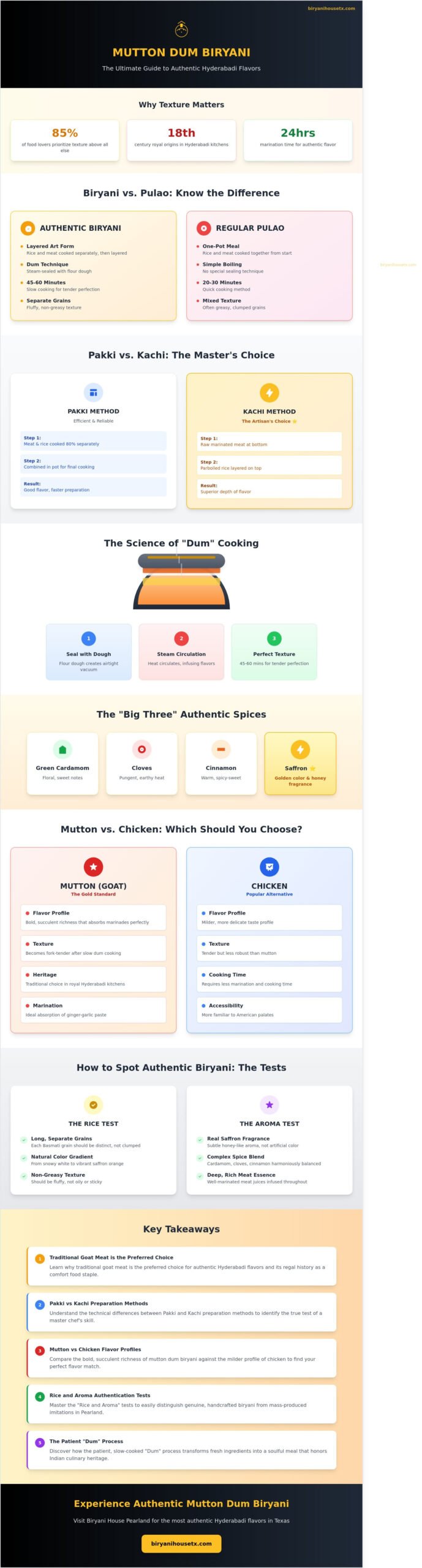
Many confuse these two, but the difference lies in the technique. Pulao is a one-pot meal where rice and meat cook together from the start. In contrast, mutton dum biryani is a layered art form. It requires parboiled rice and marinated meat to be sealed in a heavy-bottomed pot. This “dum” or steam-pressure method demands significant skill to prevent burning while ensuring the meat is fork-tender. Chefs must master the delicate balance of Pakki vs. Kachi Dum Biryani preparation styles to achieve the perfect texture. The result is fluffy, aromatic rice rather than the greasy grains often found in simpler preparations.
The Role of Saffron and Spices in Authenticity
Authenticity lives in the details. We rely on the “Big Three” spices: green cardamom for sweetness, cloves for warmth, and cinnamon for a woody depth. Real saffron threads are essential. They provide the signature golden hue and a subtle, honey-like fragrance that synthetic dyes can’t replicate. The traditional Hyderabadi spice blend consists of toasted cumin, black peppercorns, mace, and shahi jeera ground into a fine, aromatic powder.
- Cardamom: Adds a floral, sweet note.
- Cloves: Provides a pungent, earthy heat.
- Cinnamon: Offers a warm, spicy-sweet aroma.
- Saffron: The secret to the vibrant, regal color.
Comparing Preparation Methods: Pakki vs. Kachi Dum Biryani
To understand the soul of a great meal, you must look at the fire. Preparation defines the final bite. The “Pakki” method is common in many kitchens; here, the meat and rice are cooked nearly 80 percent of the way separately before they meet in the pot. It’s efficient and reliable. However, the “Kachi” method is the true artisan’s choice. In this process, raw, marinated meat sits at the bottom of the pot, topped with layers of parboiled rice. They cook together from start to finish. This creates a depth of flavor that Pakki simply cannot match. For a truly authentic mutton dum biryani, the Kachi method is the gold standard because it allows the meat juices to seep directly into every grain of rice.
The “Dum” sealing process is what makes this magic possible. We use a thick ribbon of fresh flour dough to seal the lid of the pot. This creates a vacuum. As the temperature rises, the steam has nowhere to go. It circulates back into the ingredients, infusing the rice with the essence of the spices. It’s a beautiful, self-contained ecosystem of flavor. You can experience this heritage of slow-cooking when you order our signature mutton dum biryani for your next family gathering.
The Science of the “Dum” Technique
The term “Dum” literally refers to breathing. We use a heavy-bottomed “Handi” or pot to ensure the heat distributes evenly without scorching the bottom layer. This creates a natural pressure cooker environment. While 2026 technology offers electric steamers and precision ovens, they lack the soul of a clay or dough-sealed pot. The trapped heat breaks down the tough connective tissues in mutton, turning a firm cut into a succulent masterpiece. This slow-cooking cycle often lasts 45 to 60 minutes, ensuring the spices don’t just sit on the surface but travel to the very center of the meat.
Marination: The 24-Hour Flavor Foundation
Patience is our secret ingredient. We begin the process 24 hours before the pot hits the stove. Mutton is a robust meat that requires a natural catalyst to soften. We use a blend of acidic yogurt and raw papaya paste. These ingredients contain enzymes that tenderize the fibers without making them mushy.
- Bone-in Mutton: We always use bone-in cuts because the marrow melts during the long cooking process, enriching the gravy.
- Spice Penetration: A full day of soaking allows 15 different spices to permeate the meat.
- Natural Tenderizers: Yogurt provides a tangy base while acting as a moisture lock.
This 24-hour soak ensures that when you finally peel back the dough seal, the aroma of handcrafted spices greets you like an old friend. It’s a labor-intensive process, but the results are worth every minute of waiting.
Mutton vs. Chicken Dum Biryani: Which Should You Choose?
Deciding between these two icons of Indian cuisine depends on the specific experience you crave. Mutton offers a bold, gamey richness that chicken simply cannot match. When we prepare our traditional mutton dum biryani, the marrow and fat render slowly into the aromatic, long-grain basmati rice. This creates a deep, savory profile that feels beautifully heavy and indulgent. It’s a handcrafted dish that demands your full attention. Chicken, by contrast, is the approachable favorite. It provides a mild, clean canvas that lets the individual notes of cardamom and cloves shine through. While chicken remains lean and tender, mutton is prized for its succulent, fall-off-the-bone texture.
Cost often reflects the intense labor and premium ingredients involved. Mutton is a high-value meat that requires a marination time of at least 4 hours and a slow-cook process to reach peak tenderness. This makes it the preferred choice for a special occasion meal or a grand family feast. For a reliable, high-quality lunch, many diners in the area look for chicken biryani near me in Pearland to satisfy their cravings. Both options celebrate our culinary heritage, yet they serve different moods and moments.
When to Order Mutton Over Chicken
Reserve the mutton for your dinner parties, milestone celebrations, or those much-needed “cheat days.” Its robust nature stands up beautifully to higher spice levels. If you enjoy a fiery kick, the natural fats in the mutton help balance the heat of the chilies. Always pair this rich dish with a cooling Raita or the tangy depth of Mirchi Ka Salan. These traditional sides cut through the richness, refreshing your palate between every bite of spiced rice.
The “Meat-to-Rice” Ratio Standard
A truly authentic serving must maintain a specific balance to ensure every guest feels satisfied. You should expect roughly 250 grams of meat for every 300 grams of cooked rice. This ensures that every forkful contains a piece of tender, spice-infused protein. Distribution is key; the meat shouldn’t just sit at the bottom of the pot. It must be layered carefully during the dum process to flavor the rice evenly. If you’re hosting a mixed group with different dietary preferences, remember that vegetable biryani offers a completely different texture profile that complements both meat varieties on a shared table.
How to Spot Authentic Restaurant-Quality Biryani in Pearland
Finding a plate that honors centuries of tradition requires a keen eye and an even keener palate. Real biryani isn’t just a rice dish. It’s a technical masterpiece of steam and spice. When you sit down at a table in Pearland, your senses should immediately tell a story of patience and craftsmanship. Authentic mutton dum biryani depends on the “dum” process, where the pot is sealed with dough to trap every ounce of flavor. If the steam doesn’t carry a complex bouquet the moment the seal breaks, it’s not the real deal.
Start with the rice test. Authentic Basmati grains must be long, slender, and completely separate. They should never look mushy or clumped together. Each grain should feel firm yet tender, standing as an individual piece of art. Next, lean in for the aroma test. You should detect subtle whispers of Kewra or rose water. These floral notes must be delicate. If the scent feels sharp or reminds you of chemicals, the kitchen is likely using cheap synthetic essences instead of natural distillates.
The meat provides the ultimate proof of quality. In a true mutton dum biryani, the protein cooks slowly in its own juices. The mutton should slide off the bone with minimal fork pressure. It should be succulent, not chewy or dry. Finally, evaluate the heat. Authentic biryani offers layers of flavor. You’ll taste the warmth of cardamom, the sweetness of cinnamon, and the earthy punch of cloves. It shouldn’t just be a raw chili burn that numbs your tongue. It’s a balanced dance of over 15 different spices.
Red Flags to Avoid in Pearland Restaurants
- Uniformly Orange Rice: Real saffron creates beautiful variegation, leaving some grains white, some yellow, and some deep orange. If every grain is the same neon orange, it’s just food coloring.
- Excessive Oil: A greasy puddle at the bottom of your container suggests poor fat management. Authentic versions are rich but clean.
- “Boiled” Meat: If the meat feels like it was boiled separately and tossed into the rice at the last minute, it lacks the deep infusion of spices that defines the dish.
The Importance of Halal Certification
For many in our community, Halal sourcing is the foundation of a meal. It’s about more than just dietary laws; it’s about ethics, cleanliness, and respect for the ingredients. At Biryani House, we maintain strict Halal standards to ensure every guest dines with total peace of mind. This commitment to quality sourcing is why we’re a trusted destination for those seeking authentic biryani near me in the Pearland area. We believe that when the meat is sourced with care, the final flavor is naturally superior.
Ready to taste the difference that tradition makes? Order your authentic meal from Biryani House today and experience the true art of the dum pukht style.
Experience the Best Mutton Dum Biryani at Biryani House Pearland
At Biryani House, we don’t just cook; we preserve a legacy. Our kitchen serves as a bridge between the historic streets of Hyderabad and the heart of Texas. We believe that true mutton dum biryani requires patience and respect for tradition. Our chefs follow the authentic “Kachchi” style. This involves layering raw, marinated meat with partially cooked basmati rice and sealing the pot with a heavy lid. This “Dum” process allows the meat to cook in its own juices, ensuring every grain of rice absorbs a deep, savory essence. We refuse to take shortcuts. There are no pre-cooked meats or artificial tenderizers in our kitchen. Just slow, steady heat and the craftsmanship of a dedicated culinary team.
Our restaurant provides a warm, hospitable environment where the Pearland community feels at home. We’ve designed our space to reflect the rich traditions of Indian hospitality, making every visitor feel like an honored guest. Whether you’re stopping by for a quick lunch or a long-awaited family dinner, the aroma of our spices greets you the moment you step inside. We offer several ways to enjoy our menu:
- Dine-In: Relax in our inviting dining room and enjoy fresh, steaming plates.
- Takeout: Bring the authentic flavors of the Hyderabadi kitchen to your own dinner table.
- Catering: Let us handle the food for your next big milestone or corporate gathering.
Our Signature Mutton Preparation
Quality begins with the source. We select only the finest, tender cuts of goat meat to ensure a succulent texture that falls off the bone. Our secret spice blend is a family treasure, a recipe perfected over decades that balances heat with aromatic warmth. Each batch uses hand-ground spices like cardamom, cloves, and cinnamon to create a sensory experience unique to Biryani House. As a premier indian restaurant pearland texas, we take pride in maintaining these high standards for every guest who walks through our doors.
Ordering for the Whole Family
Food is meant to be shared. Our menu caters to both individual cravings and large group needs. For those feeding a crowd, our family trays are designed to serve 5 to 10 people, making them a popular choice for weekend gatherings. Don’t forget to pair your meal with our handcrafted Garlic Naan or a chilled, creamy Mango Lassi to balance the bold spices. For those hosting larger celebrations, we provide professional indian catering services houston that bring the authentic taste of our mutton dum biryani directly to your venue. We treat every order with the same care we would give a meal in our own home.
Experience the True Spirit of Hyderabadi Hospitality
Choosing the right meal is about more than just satisfying hunger. It’s about the craftsmanship of the Kachi preparation method and the rich heritage of authentic Hyderabadi recipes. You now know how to distinguish restaurant-quality dishes by their aroma and texture. At Biryani House, we remain committed to these standards by using 100% Halal meat and slow-cooking every batch to perfection. As a top-rated Indian restaurant in Pearland, we serve as a gateway to the time-honored flavors of India. Our chefs use a specific blend of 15 hand-selected spices to ensure every serving of mutton dum biryani is succulent and aromatic. This dedication to quality creates a meal that feels like a warm welcome home. We don’t take shortcuts because we believe you deserve the most authentic experience possible. Every plate we serve reflects our pride in traditional Indian culinary arts. Join us to celebrate a meal prepared with patience, passion, and respect for our roots.
View our menu and order the best Mutton Dum Biryani in Pearland today!
Frequently Asked Questions
Is mutton biryani made from goat or lamb?
At Biryani House, we use 100 percent pasture raised goat for our authentic recipes. While some regions use lamb, goat meat provides the lean, robust flavor profile essential for a traditional biryani. This choice ensures the meat stays tender during the long cooking process. Our chefs select meat from local suppliers to maintain a consistent quality that reflects our heritage and commitment to excellence.
Why is mutton dum biryani more expensive than chicken biryani?
Mutton dum biryani costs more because goat meat typically requires 3 times the cooking time of chicken to reach perfect tenderness. The market price for high quality goat is also roughly 2 to 3 times higher than poultry. We slow cook our mutton for over 4 hours to ensure every bite is succulent. This labor intensive process and the premium cost of ingredients define the value of this royal dish.
What is the “Dum” in Mutton Dum Biryani?
Dum refers to the ancient Persian technique of steam cooking where the pot is sealed with a layer of dough. This method traps the aromatic vapors inside, allowing the meat and rice to cook in their own juices. We use a heavy bottomed handi and a slow flame to ensure the flavors meld perfectly. It’s a hallmark of our mutton dum biryani that creates an unrivaled sensory experience for our guests.
Is the mutton biryani at Biryani House spicy?
Our mutton biryani features a balanced spice profile using 15 different hand ground spices like cardamom, cloves, and cinnamon. While it carries a warm heat, it’s designed to be flavorful rather than overwhelming. We rate our standard spice level at a 6 out of 10 on a traditional heat scale. Guests can always request a milder or extra spicy version to suit their personal preference when they visit us.
Can I order mutton biryani for catering in Pearland?
Yes, we provide full catering services for the Pearland community for groups ranging from 10 to 500 people. Our team handles everything from small family gatherings to large corporate events at local venues. We recommend placing your order at least 48 hours in advance to ensure we can prepare your mutton dum biryani with the care it deserves. Contact our Pearland location directly to discuss your specific event needs.
Does Biryani House serve Halal mutton?
We serve 100 percent Halal certified mutton at Biryani House to honor the dietary traditions of our community. Every cut of meat is sourced from suppliers who follow strict ethical and religious guidelines. This commitment to authenticity ensures that every guest can enjoy our handcrafted meals with complete peace of mind. We maintain these standards across all our locations to provide a consistent and respectful dining experience for everyone.
What is the best way to reheat Mutton Dum Biryani at home?
The best way to reheat your biryani is by steaming it for 5 to 8 minutes to retain moisture. If you’re using a microwave, place the rice in a bowl and sprinkle 1 tablespoon of water over the top before covering it with a damp paper towel. Heat it on medium power for 2 minutes. This technique prevents the rice from drying out and restores the succulent texture of the goat meat.
Is Mutton Dum Biryani gluten-free?
Our mutton biryani is naturally gluten free as it’s made with long grain basmati rice, meat, and whole spices. We don’t use any flour or thickening agents in our traditional marinades or rice preparation. However, we prepare all dishes in a kitchen that handles wheat products. Guests with severe celiac disease should inform our staff so we can take extra precautions during the preparation of your meal to ensure your safety.