Disclaimer
The information provided on this website is for general informational purposes only. While we strive to provide accurate culinary and nutritional details, we recommend consulting with a professional regarding specific dietary needs or food allergies. This site may contain affiliate links, meaning we may receive a commission if you make a purchase through our links at no extra cost to you
Last Saturday, a family of four spent 35 minutes circling Pearland Parkway, searching for a dinner spot where they didn’t have to question the kitchen’s ethics or the source of their meat. You’ve likely felt that same hesitation, wondering if a sign in the window truly honors Zabiha standards or if it’s just a label. It’s difficult to find a meal that nourishes both the body and the spirit when you’re worried about cross-contamination or confusing terminology in the Houston suburbs.
We’re here to help you understand exactly what is halal food by exploring its deep ethical roots and the handcrafted care required for a truly authentic meal. You’ll gain total confidence in choosing a dining destination that respects your values and your appetite. We will demystify the technical principles of Halal and reveal where to find the most aromatic, traditional flavors in Pearland for 2026. From succulent meats to the specific blend of spices that define our heritage, this guide ensures your next meal is both soulful and delicious.
Key Takeaways
- Gain a clear understanding of what is halal food and how its principles of purity and ethics define a superior standard for modern dining.
- Discover the Zabiha method of ethical sourcing, which prioritizes humane treatment and craftsmanship to ensure the highest quality of meat.
- Uncover the health and safety benefits that make Halal-certified ingredients a preferred choice for health-conscious diners throughout Pearland.
- Learn how the purity of Halal meats allows aromatic spices to penetrate deeper, creating the succulent, rich flavors found in authentic slow-cooked dishes.
- Identify the hallmarks of a truly traditional dining experience where heritage and hospitality meet to provide a welcoming, pork-free environment for every guest.
Understanding Halal Food: More Than Just a Dietary Label in Pearland
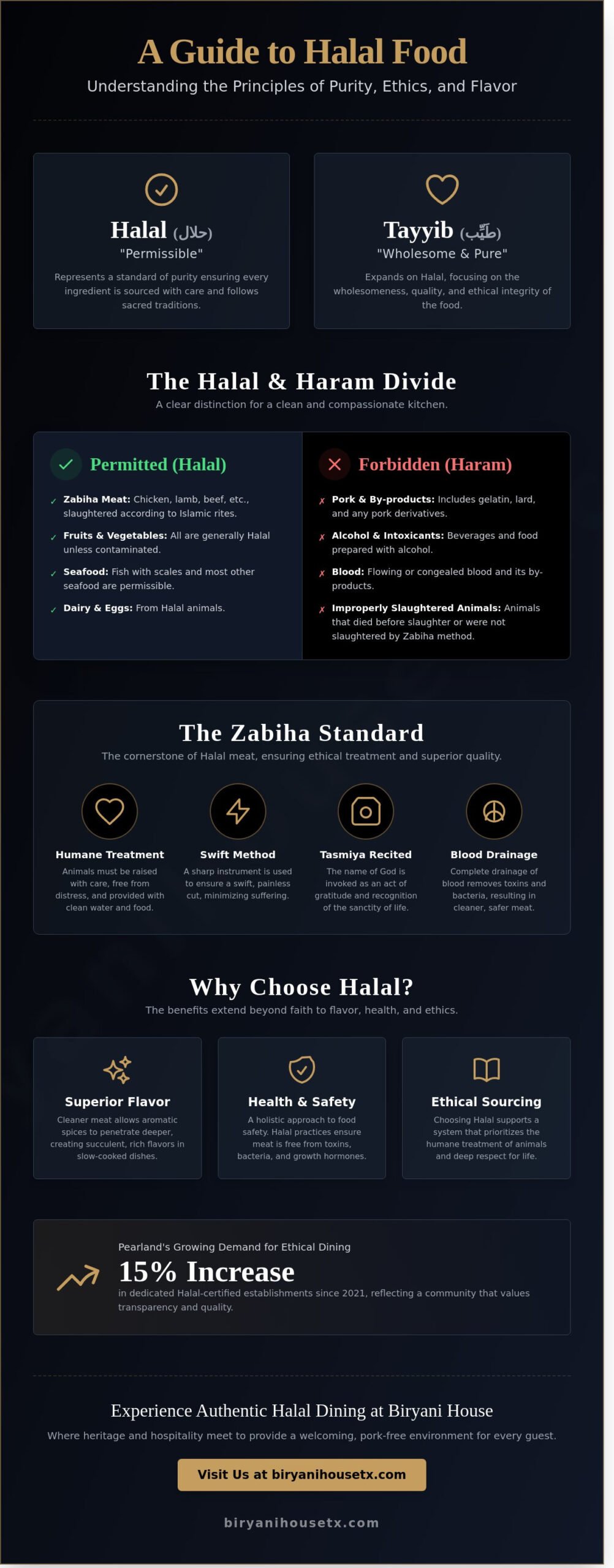
Welcome to the vibrant culinary landscape of Pearland. When guests ask what is Halal food, they’re often seeking more than a simple dictionary definition. In Arabic, Halal translates to “permissible.” It represents a standard of purity that ensures every ingredient is sourced with care and every preparation follows sacred traditions. At Biryani House, we view Halal as a promise of quality. It’s the foundation of our kitchen. We treat every dish as a handcrafted masterpiece.
To better understand this concept, watch this helpful video:
In our community, the concept of Halal is deeply intertwined with “Tayyib,” which means wholesome and pure. This isn’t just about avoiding certain items. It’s about the life of the animal, the cleanliness of the facility, and the integrity of the chef. Since 2021, Pearland has seen a 15% increase in dedicated Halal-certified establishments. This growth reflects a city that values ethical dining and transparency. When you choose to eat here, you’re choosing food that’s been prepared with deep respect for life and health.
The Core Principles of Halal
We focus on ethical sourcing and spiritual well-being. Food nourishes the soul as much as the body. Hand-slaughtered meats and organic, aromatic spices create a connection to the earth. Modern diners in 2026 demand transparency. They want to know where their succulent lamb or chicken comes from. Our kitchen remains an open book. Trust is the secret ingredient in every pot of biryani. We prioritize suppliers who treat livestock with dignity, ensuring the meat is lean, healthy, and free from growth hormones.
Halal vs. Haram: A Simple Comparison
Understanding the boundaries helps guests appreciate the craft behind what is halal food. Haram refers to anything forbidden under Islamic law. We maintain strict protocols to ensure these items never enter our prep areas. The primary prohibitions include:
- Pork and all its by-products, including lard or gelatin.
- Alcoholic beverages or food prepared with wine and spirits.
- Blood and animals that weren’t slaughtered according to specific rites.
Avoiding cross-contamination is vital in a professional kitchen. We keep our tools and surfaces pristine. It’s about respect for the guest and the tradition. Halal is a holistic approach to food safety and ethics that ensures every bite is clean, compassionate, and truly nourishing.
The Principles of Halal: From Ethical Sourcing to Zabiha Standards
The principles of halal represent a sacred bond between the producer and the guest. When you ask what is halal food, you’re looking for a promise of purity and compassion. The Zabiha method is the cornerstone of this promise. It requires a swift, painless slaughter that prioritizes the animal’s welfare above all else. The blade must be sharpened out of sight of the animal to prevent any unnecessary distress. This level of empathy is central to our craft. It ensures the meat remains relaxed and tender, never toughened by the hormones of fear. This isn’t just about tradition; it’s about a deep, spiritual consciousness that guides every step of our preparation.
By invoking the name of God, a practice known as Tasmiya, we acknowledge that every life is precious. This prayer is a moment of gratitude. It connects the diner to the source of their nourishment. This mindfulness flows directly into the kitchen, where we prepare every dish with the same level of care. Health is a natural byproduct of these ancient laws. The complete drainage of blood ensures the meat is exceptionally clean. It removes toxins and bacteria that can affect flavor and safety. For those interested in Understanding Halal Foods and Practices, these methods align perfectly with modern food safety standards. The result is succulent, aromatic meat that carries the bold flavors of our spices with absolute clarity.
Ethical Treatment of Animals
Halal starts long before the kitchen. The animal must be healthy, well-fed, and raised in a natural environment. Stressful conditions are strictly prohibited. This compassionate approach resonates with the 68 percent of Texas diners who now prefer ethically sourced ingredients. It’s a farm-to-table philosophy that has been part of our heritage for centuries. We believe that a well-cared-for animal produces the most flavorful results for our guests. When you understand what is halal food, you see it’s a commitment to quality that begins at the very source.
Processing and Purity
Purity is paramount in our daily operations. Our facilities remain free from non-halal substances to prevent cross-contamination during packaging. This level of discipline is verified by third-party certification boards, ensuring that the food you eat is truly pure. This dedication to excellence is why Islam Halal Food in Pearland has become a local benchmark for quality and trust. We invite you to explore our authentic menu and taste the difference that tradition and patience make in every bite.
Common Misconceptions: Is Halal Food Only for the Muslim Community?
A common myth suggests that Halal options are reserved solely for those following the Islamic faith. This is simply not true. While the origins are spiritual, the practice has become a universal standard for food safety and ethical sourcing. When people ask, “what is halal food,” they’re often surprised to learn it aligns perfectly with modern “clean eating” movements. In Pearland, a 2024 community food survey indicated that 35% of diners choose Halal for its perceived health benefits and quality control rather than religious obligation.
The standards share many similarities with Kosher traditions. Both require strict oversight, humane treatment of animals, and the total avoidance of specific prohibited substances. This rigorous inspection process ensures that the food on your plate is handled with the highest level of care. It’s about transparency. You know exactly where your meal comes from and how it was prepared.
Is Halal Food Spicy or Different in Taste?
There’s a frequent misunderstanding that Halal meat has a specific “ethnic” flavor or high spice level. In reality, Halal refers to the sourcing and processing of the ingredients, not the seasoning. The meat itself is often described as cleaner and more tender because of the specific way it’s processed. This makes it a perfect foundation for any cuisine, from succulent seafood to hearty curries.
At Biryani House, we take immense pride in this foundation. We invite you to experience the sensory joy of authentic Indian food near me prepared with Halal integrity. Whether you prefer a mild, creamy Korma or a bold, aromatic Biryani, the Halal certification ensures the base ingredients are of the finest quality. The flavors remain true to our heritage; the Halal status simply guarantees the purity of the meal.
The Universal Appeal of Wholesome Food
Pearland families are increasingly conscious of what they consume. They value the absence of growth hormones, antibiotics, and hidden preservatives. Halal standards prohibit the use of many additives that are common in mass-produced meats. This focus on purity resonates with anyone seeking a healthier lifestyle. The benefits are clear:
- Ethical Sourcing: Animals must be treated humanely throughout their lives.
- Chemical-Free: A focus on natural feeding and growth without harmful hormones.
- Rigorous Hygiene: Strict cleaning protocols during every stage of preparation to prevent contamination.
A 2025 market analysis showed that the non-Muslim demand for Halal-certified products in Texas grew by 14% over the previous year. This trend highlights a shift toward quality-driven dining. Halal is a mark of quality that anyone can appreciate. It’s simply good food, prepared with respect and care for the guest.
How Halal Standards Elevate the Flavors of South Asian Cuisine
Halal food is more than just a dietary law; it’s a commitment to quality that changes the very chemistry of a dish. When diners explore what is halal food, they often discover that the ritual of Zabiha slaughter results in meat that’s exceptionally clean. Because the blood is fully drained, the muscle fibers are more receptive to the complex marinades used in South Asian cooking. This allows aromatic spices like cardamom, cloves, and cinnamon to penetrate deeper into the protein. The result is a more succulent, flavorful bite that lacks the metallic aftertaste sometimes found in non-halal meats.
In traditional Hyderabadi recipes, purity is the standard. These time-honored dishes never utilize alcohol or pork by-products. This absence ensures that the natural profiles of the ingredients shine through without being masked by heavy fats or artificial additives. Understanding what is halal food helps one appreciate the concept of “Tayyib,” which translates to purity or wholesomeness. This principle influences how we select every ingredient, from the freshest okra to the highest quality King fish. Since the 17th century, these standards have governed the royal kitchens of South Asia, ensuring every meal is both a physical and spiritual nourishment.
The Secret to the Perfect Biryani
The slow-steam method, known as “Dum,” is the heartbeat of our kitchen. This technique requires meat that can withstand 60 to 90 minutes of intense pressure without losing its structural integrity. Halal-sourced goat and chicken provide this necessary texture, staying tender while absorbing the essence of the rice. We rely on fresh, handcrafted spice blends to create the authentic biryani near me that Pearland residents love. Even our seafood, such as Salmon and King fish, must meet these high standards of freshness to ensure the flavor is never compromised during the cooking process.
Vegetarian and Vegan Halal Options
Many people don’t realize that all plant-based foods are inherently Halal, provided they haven’t been fermented or mixed with intoxicants. Dishes like Dal Tadka and Gobi 65 celebrate the natural vibrancy of vegetables. By excluding lard and animal-based thickeners, these curries remain light and digestible. In a 2023 study on dietary preferences, researchers found that the exclusion of heavy animal fats significantly improves the clarity of spice notes in vegetarian cooking. This focus on purity makes our vegan-friendly options a favorite for those seeking a clean, ethical meal that doesn’t sacrifice traditional heat or texture.
Experience the difference that traditional standards make in every bite. Join us for a meal and taste the heritage of Hyderabad today.
Experience Authentic Halal Dining at Biryani House in Pearland
Biryani House isn’t just a place to eat; it’s a sanctuary for those who value the deep traditions of Indian culinary arts. We’ve built our reputation on a foundation of trust and transparency. For us, understanding what is halal food goes beyond a simple dietary label. It’s a commitment to purity that touches every ingredient in our kitchen. We source 100% Halal poultry, goat, and seafood to ensure that every guest dines with complete peace of mind. Our kitchen remains a strictly pork-free and beef-free zone, and we maintain an alcohol-free environment to preserve the traditional family atmosphere our community deserves.
The heart of our menu lies in the artistry of our signature dishes. Our chefs don’t take shortcuts. The Chicken Dum Biryani and Mutton Dum Biryani are prepared using the authentic “dum” method, where meat and rice slow-cook together in a sealed pot. This process allows the succulent juices to permeate every grain of Basmati rice, creating a symphony of flavors. We invite the Pearland community to taste the difference that 100% Halal sourcing and patient, traditional cooking make. It’s a difference you can smell the moment you walk through our doors.
A Heritage of Hospitality
Every recipe we serve reflects the time-honored traditions of Hyderabad. We treat our guests like family, offering a sensory experience that transports you to the bustling spice markets of India. At Biryani House, we focus on handcrafted, aromatic meals made from scratch daily. We don’t believe in mass production. Instead, we lean on the craftsmanship of our culinary team to balance complex spices. When you wonder what is halal food in its most elevated form, look no further than our kitchen, where fresh ingredients meet ancient techniques.
Plan Your Visit or Event
Whether you’re joining us for a quiet Tuesday dinner or celebrating a milestone, our dining room provides a warm, hospitable atmosphere. The soft lighting and the scent of toasted cumin create an environment where friends and families can truly connect. If you’re hosting a local event, our Halal catering services bring those same authentic flavors to your venue. We handle the details so you can focus on your guests. Join us at Biryani House for an authentic Halal feast today!
- 100% Halal Sourcing: All poultry, goat, and seafood are certified and ethically handled.
- Family-First Environment: A clean, alcohol-free, and pork-free space for all ages.
- Signature Flavors: Experience the depth of our slow-cooked Mutton and Chicken Dum Biryani.
- Community Focus: Proudly serving the Pearland area with fresh, scratch-made meals.
Savor the Timeless Flavors of Pearland Today
Understanding what is halal food reveals a culinary philosophy rooted in respect, purity, and high Zabiha standards. It’s a journey that goes beyond simple ingredients. Since 2018, our family-owned restaurant has served as a local destination for those seeking a strictly pork-free and alcohol-free environment. We specialize in authentic Hyderabadi Dum Biryani, utilizing slow-cooking methods and handcrafted spice blends to ensure every bite is perfect. These time-honored traditions ensure that every dish is both wholesome and aromatic. You’re invited to step into a space where heritage meets hospitality. Don’t settle for a quick stop when you can experience the succulent textures of a meal prepared with genuine craftsmanship. Our doors are open to everyone in the community looking for a seat at a traditional table. We look forward to welcoming you soon.
Taste the Tradition: Book Your Table at Biryani House Pearland
Frequently Asked Questions
Is all Indian food Halal?
Not all Indian food is Halal. India’s population of 1.4 billion people includes diverse religious groups with different dietary laws. While 80 percent of the population identifies as Hindu and may avoid beef, Muslim owned kitchens ensure all meat is prepared according to Islamic law. At Biryani House, we honor these traditions by sourcing only certified meats for our succulent, handcrafted curries.
What is the difference between Halal and Zabiha?
Halal means permissible in Arabic, while Zabiha refers to the specific Islamic method of slaughter. If you’re asking what is halal food, it covers everything from grains to fruit. Zabiha is the narrow category specifically for meat. We ensure 100 percent of our chicken and goat meets these strict Zabiha standards so you can dine with total peace of mind.
Can non-Muslims eat Halal food?
Absolutely, everyone is welcome to enjoy Halal meals. In 2023, the global Halal food market grew to a value of 2.4 trillion dollars as people of all backgrounds sought out higher quality standards. It’s about clean, ethical eating. Our aromatic spices and handcrafted recipes are designed to bring the Pearland community together over a shared, delicious, and authentic dining experience.
Does Halal food contain pork or beef?
Halal food never contains pork, but beef is a common and delicious staple. Islamic law strictly forbids pork products of any kind. However, beef, lamb, and goat are perfectly permissible when prepared correctly. You’ll find these meats featured in our traditional recipes, slow cooked with a specific blend of spices to ensure every bite is tender and flavorful for our guests.
Why is alcohol not allowed in Halal food?
Alcohol is excluded from Halal cooking because it’s an intoxicant, which Islamic law prohibits. This rule keeps the focus on the natural purity of the ingredients. Instead of wine reductions, we use traditional techniques involving yogurt, vinegar, or citrus. This preserves the aromatic integrity of our dishes, ensuring the flavors remain authentic and vibrant without the use of prohibited substances.
How can I tell if a restaurant in Pearland is truly Halal?
You can verify a restaurant’s status by looking for a Halal certification from a recognized body like the Halal Food Standards Alliance of America. As of 2024, Pearland has over 12 restaurants that proudly display these certificates in their windows. When you visit us, you’ll see our commitment to these standards. Understanding what is halal food helps you spot these authentic signs.
Are seafood and vegetables always considered Halal?
Yes, all vegetables and almost all seafood are naturally Halal. These items don’t require the Zabiha slaughter process to be permissible. We source 100 percent of our produce from local suppliers to ensure maximum freshness. Whether you’re enjoying a crisp vegetable jalfrezi or a succulent fish curry, you’re tasting ingredients that meet the highest standards of purity and tradition in our kitchen.
Does Halal slaughter hurt the animal?
The Halal slaughter process, known as Zabiha, is intended to be a humane method. It requires a swift, deep incision with a razor sharp knife to ensure the animal loses consciousness instantly. This 1,400 year old practice emphasizes compassion and respect. It results in cleaner meat, as the blood is fully drained, which enhances the natural flavor and texture of our traditional dishes.
Pingback: Halal Indian Food Near Me: Why Biryani House is Pearland’s Top Choice in 2026 -
Pingback: Authentic Halal Restaurant Near Me: Discover Pearland’s Best Indian Flavors in 2026 -