Disclaimer
The information provided on this website is for general informational purposes only. While we strive to provide accurate culinary and nutritional details, we recommend consulting with a professional regarding specific dietary needs or food allergies. This site may contain affiliate links, meaning we may receive a commission if you make a purchase through our links at no extra cost to you
The most soul-warming dessert in South Asian cuisine isn’t a cake or a pastry; it’s a humble root vegetable transformed by hours of patient, slow-simmering craftsmanship. You’ve likely spent evenings searching Pearland for authentic Gajar halva that captures the essence of home, only to find options that feel artificial or mass-produced. It’s a common disappointment when you crave the genuine comfort of a traditional sweet but find it lacks the depth of a handcrafted recipe. We believe every guest deserves a dessert that tastes like a celebration of heritage rather than a quick service afterthought.
In this guide, you’ll discover why this carrot masterpiece is the essential cooling counterpart to any spicy feast. We’ll explore the rich history and the artisanal preparation methods that turn simple ingredients into a festive delight. You’ll also learn exactly where to find the most authentic version in our community, including our own $6.55 recipe at Biryani House. Our chefs slow-cook fresh carrots with ghee, milk, and green cardamom to ensure every bite provides the succulent, aromatic experience you’ve been looking for. Get ready to experience a traditional dessert that feels both exotic and like home.
Key Takeaways
- Understand the labor-intensive process of slow-simmering carrots in full-fat milk to create a texture that melts in your mouth.
- Discover the aromatic secrets of authentic Gajar halva, including the precise use of green cardamom and hand-selected nuts.
- Learn how to pair this warm sweet with savory dishes to create a perfectly balanced South Asian dining experience.
- Identify the key differences between various traditional Indian desserts so you can choose the right flavor for your palate.
- Explore the heritage behind the Hyderabadi cooking methods used to prepare the most authentic version available in Pearland.
What is Gajar Halwa? The Soul of Indian Desserts
Step into a traditional South Asian kitchen during a celebration, and you’ll immediately encounter the intoxicating scent of roasting carrots and warm spices. This is the essence of Gajar halva. It’s a dish that represents the very heart of Indian hospitality. While some might call it a simple carrot pudding, it’s known by many names like Gajar ka Halwa or Gajrela. It’s a dessert that transcends the sum of its parts. To truly understand What is Gajar Halwa, you must experience how it balances richness with the natural sweetness of the earth.
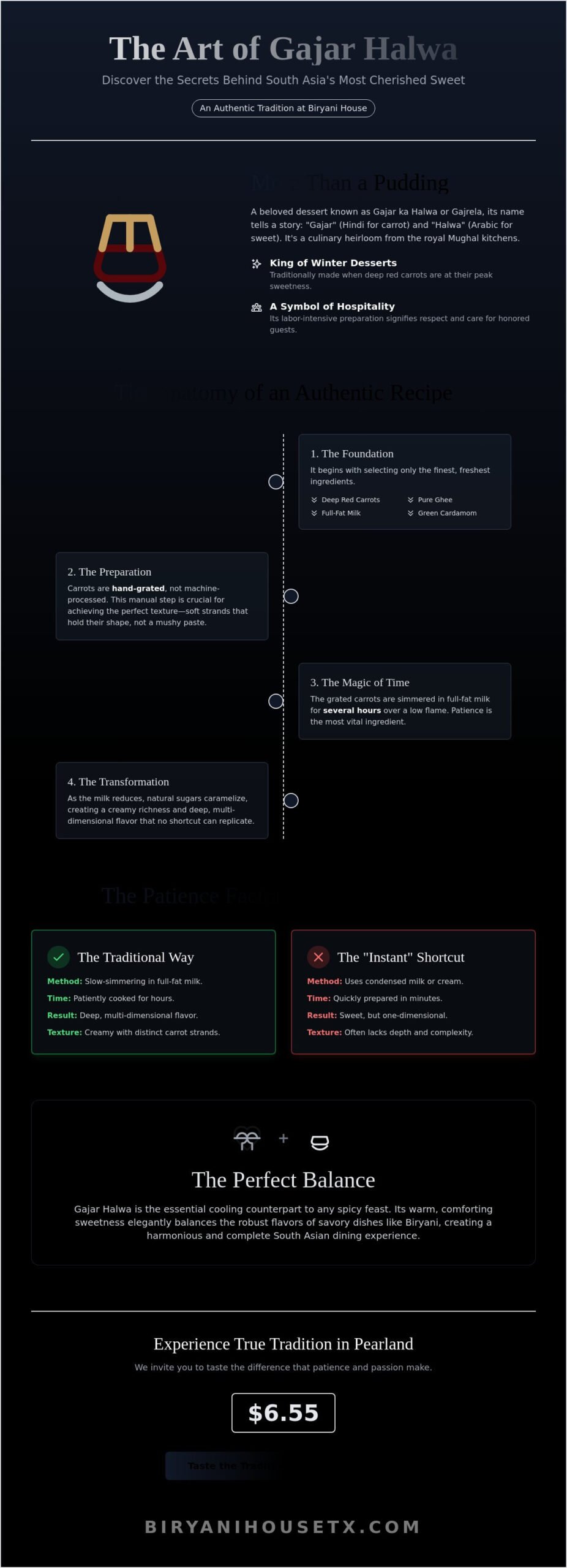
In South Asia, this dish is hailed as the “king of winter desserts.” This title stems from the traditional harvest cycle. Deep red carrots are at their peak sweetness during the cooler months. Serving this dish to guests is a significant cultural marker. It signals that you are an honored guest. The labor-intensive process of grating and slow-simmering carrots shows a level of respect and care that few other dishes can match. It’s a warm welcome in a bowl.
To see the artistry behind this dish, watch this helpful video:
The Meaning Behind the Name
The name itself tells a story of cultural fusion. “Gajar” is the Hindi word for carrot. “Halwa” is an Arabic term that refers to a dense, sweet confection. This linguistic blend reflects the dish’s journey through history. Its roots are firmly planted in the royal Mughal kitchens. These chefs were masters of slow-cooking. They combined indigenous ingredients with Persian culinary techniques. Over centuries, the recipe evolved from a royal indulgence into a pan-South Asian staple. Today, these same time-honored methods have traveled from ancient palaces to our modern tables in Pearland.
A Feast for the Senses
The sensory profile of this dessert is unmistakable. A vibrant orange hue greets you first. This color isn’t from dyes. It’s the natural result of carrots caramelizing slowly in premium ghee. The texture is a unique masterpiece. It’s soft and creamy from being simmered in full-fat milk, yet it retains a pleasant, slight crunch from the hand-grated vegetables. We don’t believe in over-processing ingredients. The integrity of the carrot must remain.
Aromatic spices provide the final touch of balance. Green cardamom is the star here. Its floral, slightly citrusy notes ensure the dessert isn’t cloyingly sweet. Instead, it’s a sophisticated interplay of flavors. For many of our guests, the first bite of warm Gajar halva is a deeply nostalgic experience. It evokes memories of family gatherings and festive joy. It’s the kind of comfort that feels like a warm embrace from home.
The Craft of Authenticity: How Traditional Gajar Halwa is Prepared
Authenticity isn’t just a label; it’s a commitment to a process. In our kitchen, the creation of Gajar halva begins long before the stove is lit. It starts with selecting the right carrots. We look for deep color and high moisture content. These are then hand-grated to ensure a specific consistency. Machine-grating often turns the vegetable into a mushy paste. We want those distinct, soft strands that hold their shape and provide a gentle bite. This manual labor is the foundation of the dish’s unique texture.
The traditional Gajar Halwa preparation is a slow, rhythmic dance. There are no shortcuts here. We simmer the grated carrots in full-fat milk for several hours. As the liquid evaporates, the natural sugars in the carrots begin to caramelize. This reduction creates a creamy richness that no artificial thickener or cornstarch can mimic. It’s this patience that defines our culinary philosophy. We believe that time is the most important ingredient in any heritage recipe.
Slow-Cooking vs. Instant Methods
Many modern recipes rely on condensed milk or heavy creams to save time. While these versions are sweet, they lack the multi-dimensional depth of flavor found in a slow-reduced dish. Authentic kitchens avoid these “instant” tricks. When milk reduces naturally over a low flame, it creates tiny grains of milk solids that cling to the carrot strands. This is the “patience factor” of South Asian cooking. It’s the difference between a quick snack and a handcrafted masterpiece that honors the old ways.
Essential Ingredients for a Traditional Profile
The finishing touches are just as vital as the base. Pure Ghee, or clarified butter, is the secret to that signature glossy finish you see on a perfect serving. It adds a nutty aroma that balances the sweetness of the carrots. We also incorporate Khoya, which are milk solids reduced to a fudge-like consistency. This adds a layer of luxury and richness to every spoonful. If you’re curious about how these flavors come together in a professional kitchen, you can explore our traditional menu to see our commitment to these techniques.
Fragrant green cardamom pods are crushed fresh to release their essential oils. We then garnish the dish with a trio of textures to provide a sensory delight:
- Sliced almonds for a delicate, light crunch
- Vibrant pistachios for a pop of color and earthiness
- Buttery cashews for a rich, savory finish
Every bowl is finished with care. We ensure the final product is as beautiful as it is delicious, reflecting the hospitality we extend to every guest who walks through our doors.
Gajar Halwa vs. Other Indian Desserts: Finding Your Favorite
Choosing the right finish for a traditional meal is an art form. Every South Asian sweet carries its own distinct personality and history. While many diners are familiar with the syrupy intensity of Gulab Jamun, Gajar halva offers a completely different sensory experience. It isn’t just about sugar. It’s about the deep, earthy sweetness of fresh produce. If you’re looking for a dessert that feels grounded and complex, this carrot-based masterpiece is often the preferred choice over flour-based or fried alternatives.
The contrast with other staples is striking. Gulab Jamun consists of deep-fried dough balls soaked in a heavy cardamom syrup. It’s a concentrated burst of sweetness. In comparison, Gajar halva relies on the slow reduction of milk to create richness. Then there is Kheer, the beloved rice pudding of the subcontinent. While Kheer is creamy and liquid, halwa is dense and textured. It provides a satisfying bite that Kheer lacks. For those seeking a vegetable-centric treat, the carrot provides a vibrant, natural base that feels both indulgent and wholesome.
Texture and Sweetness Levels
One reason many of our guests prefer this dish is the balance of sugars. Flour-based sweets often require heavy amounts of cane sugar to achieve their flavor. Gajar halva is different. It utilizes the natural sugars already present in the carrots. This results in a dessert that feels significantly lighter on the palate. The texture is a sophisticated blend. You get the creaminess of the reduced milk solids alongside the soft, fibrous strands of the hand-grated carrots. It’s the perfect cooling companion after a spicy, savory meal.
The Best Occasions for Each Sweet
In traditional hospitality, certain sweets are reserved for specific moments. While a simple piece of fudge might suit a quick afternoon tea, halwa is the ultimate celebratory dish. It’s a staple at weddings and major festivals because of the “patience factor” we discussed earlier. Serving it shows your guests that you value their presence enough to invest hours into their meal. It represents the pinnacle of warm, welcoming service. To see how this fits into the wider world of sweets, you can explore our guide on authentic Indian desserts to find your perfect match.
Whether it’s a festive gathering or a quiet family dinner, the warmth of a freshly prepared bowl of halwa is hard to beat. It bridges the gap between a simple vegetable and a royal indulgence. It’s a testament to the creativity of South Asian kitchens, where even the most humble ingredients are elevated to something extraordinary through craftsmanship and care.
How to Enjoy Gajar Halwa in Pearland: Pairing and Dining Tips
To truly appreciate the depth of Gajar halva, you must experience it at the correct temperature. While some sweets are served chilled, this carrot masterpiece reaches its full aromatic potential when it’s piping hot. Heat releases the essential oils in the green cardamom pods. It softens the premium ghee, allowing it to coat each strand of slow-cooked carrot. In Pearland, we take immense pride in serving it exactly this way. It’s the difference between a simple snack and a sensory journey that honors our culinary roots. Every spoonful should feel like a warm embrace.
There’s a deep-rooted connection between the savory heat of a main course and the comforting finish of a traditional dessert. A robust Chicken Dum Biryani near me deserves a sweet finish to balance the complex spices. The contrast is essential. The savory, aromatic rice and tender chicken provide the intensity, while the halwa offers a soothing, gentle conclusion. It’s a hallmark of South Asian hospitality to ensure the palate is refreshed and satisfied before the meal ends. It’s about ending the dining experience on a high, lingering note of comfort.
Creating a Balanced Meal
Hyderabadi dining is all about the harmony of flavors. If you’ve enjoyed the bold, fiery kick of our Chicken 65, the creamy milk base of the halwa acts as the perfect balm. It’s a functional choice as much as a delicious one. The natural fats in the ghee and milk help neutralize the spice on your tongue. This is why Pearland families often choose this dish for multi-generational gatherings. It’s a crowd-pleaser that bridges the gap between the adventurous spice-lovers and those seeking pure, handcrafted comfort. It’s a staple of our community’s weekend traditions.
Ordering Like a Pro
Want to elevate your experience when you visit? Don’t be afraid to ask for extra nuts. A few more sliced almonds or pistachios add a delightful crunch that contrasts with the soft, slow-cooked carrots. We also recommend sharing the experience. Dessert in our culture is rarely a solitary affair. It’s better with a group, passing the bowl around as you share stories of the day. For the ultimate finish, pair your sweet with a warm cup of Chai or a refreshing Mango Lassi. The lassi provides a tangy brightness that cuts through the richness of the halwa beautifully.
If you’re ready to taste this tradition for yourself, view our menu and plan your visit to experience authentic hospitality in the heart of Pearland. We invite you to join us and discover why this dessert remains a timeless favorite for our guests.
Experience the Tradition: Gajar Halwa at Biryani House Pearland
At Biryani House, we don’t just serve food; we share our heritage. Our Gajar halva is a testament to this philosophy. We follow the traditional Hyderabadi method, a process that values the slow transformation of ingredients over the speed of modern service. Every batch is prepared with the same care you’d find in a family kitchen. We believe that hospitality starts with the quality of what we put on your plate. It’s about making every visitor feel like an honored guest from the moment they walk through our doors in Pearland. This commitment to craftsmanship ensures that every bite is a celebration of flavor.
Our kitchen team hand-selects every carrot for its natural sweetness and vibrant color. We use only premium ghee and aromatic spices to achieve that signature, succulent finish. This dedication to quality makes our dessert the perfect end to an authentic biryani feast. The richness of the slow-cooked carrots provides a gentle, sweet counterpoint to the bold spices of our signature rice dishes. It’s a culinary tradition that has stood the test of time, and we’re proud to bring it to your table.
Crafted with Patience and Pride
We’ve worked hard to maintain a genuine homemade taste within our professional kitchen. Our secret blend of spices is what truly sets our version apart from any other in the Pearland area. We strictly adhere to halal food standards in every step of our preparation, ensuring that our community can dine with complete peace of mind. This focus on tradition and integrity is why our guests return time and again. We don’t use artificial colors or shortcuts. Instead, we rely on the natural vibrancy of fresh carrots and the deep flavors of milk solids reduced over a low flame.
Visit Us in Pearland Today
We invite our local community to taste the difference that handcrafted sweets can make. Our restaurant offers a warm, family-friendly atmosphere where you can relax and savor every bite together. Whether you’re celebrating a special milestone or simply enjoying a weeknight meal, we aim to make you feel like part of our family. Our Gajar halva is currently priced at $6.55 on our official website, providing an affordable way to experience a dessert once reserved for royalty. Come visit Biryani House today and discover why our passion for tradition makes us the ultimate destination for authentic South Asian flavors in Pearland.
Taste the Rich Heritage of South Asian Sweets
You now understand that true Gajar halva is far more than a simple carrot dish. It’s a labor-intensive masterpiece. This dessert requires hours of slow-simmering and hand-grated precision to achieve its signature texture. Whether you’re balancing the heat of a spicy biryani or sharing a festive moment with family, it offers a cooling, aromatic finish that mass-produced options simply can’t match. It represents the very heart of our culinary traditions.
Since 2018, Biryani House has served as a top-rated Indian restaurant in Pearland. We’re dedicated to preserving these time-honored Hyderabadi recipes. By using only freshly grated carrots and premium ghee, we ensure every guest feels like an honored member of our community. There’s no better way to discover the joy of handcrafted sweets than by tasting them for yourself.
Savor the tradition, visit Biryani House in Pearland for authentic Gajar Halwa!
We look forward to welcoming you to our table and sharing a piece of our heritage with you soon.
Frequently Asked Questions
Is Gajar Halwa gluten-free?
Yes, traditional Gajar halva is naturally gluten-free. The recipe relies on fresh carrots, full-fat milk, sugar, and ghee rather than wheat or flour-based thickeners. It is an excellent choice for guests with gluten sensitivities who still want to enjoy a rich, handcrafted South Asian sweet. We always recommend double-checking with your server regarding specific kitchen preparation practices to ensure your complete peace of mind.
Can I find vegan Gajar Halwa in Pearland?
Authentic versions of this dish are rarely vegan because the traditional flavor profile depends on dairy. The slow-simmering process requires full-fat milk and premium ghee to achieve the necessary richness and glossy finish. While some modern home recipes use coconut milk or almond milk, most traditional establishments in Pearland stick to time-honored dairy-based methods to preserve the heritage and specific mouthfeel of the dessert.
Why is Gajar Halwa traditionally served warm?
Serving this dessert warm is essential for releasing the complex essential oils found in green cardamom and saffron. Heat ensures the ghee remains in a liquid state, which provides a succulent, velvety texture that coats the palate. When chilled, the fats can solidify and dampen the vibrant flavors of the caramelized carrots. A warm serving temperature transforms the dish into a deeply comforting experience that balances the senses.
How many calories are in a serving of Gajar Halwa?
A standard 100-gram serving typically contains between 250 and 350 calories. This variation depends on the specific ratio of ghee, sugar, and milk solids used by the chef. While it is a rich indulgence, the primary ingredient is a nutrient-dense root vegetable. Most diners find that a single serving is perfectly satisfying due to the high quality of the fats and the natural fiber found in the hand-grated carrots.
What makes Hyderabadi Gajar Halwa different from other versions?
The Hyderabadi variation often emphasizes a more intensive slow-cooking process and a generous use of khoya, which are dried milk solids. This results in a much richer, fudge-like consistency compared to the lighter, more liquid versions found in some North Indian regions. Our specific Hyderabadi-influenced Gajar halva focuses on a deep caramelization that highlights the natural sugars of the carrot while maintaining a sophisticated, aromatic balance of spices.
Is Gajar Halwa safe for people with nut allergies?
No, this dessert is generally not safe for those with nut allergies. Traditional recipes almost always include a garnish of sliced almonds, pistachios, and cashews to provide a necessary textural contrast. Even if nuts aren’t visible on top, they are often incorporated into the cooking process or prepared in environments where cross-contamination is likely. We prioritize the safety of our guests and advise those with severe allergies to exercise caution.
Can I order Gajar Halwa for catering events in Pearland?
Yes, this dessert is a premier choice for catering because it holds its temperature well and represents the pinnacle of hospitality. It is a staple at local weddings, religious festivals, and large family gatherings throughout the Pearland area. Ordering this handcrafted sweet for your event allows you to provide a traditional, crowd-pleasing finish that feels both celebratory and deeply personal. It’s an easy way to bring a touch of heritage to any group meal.