Disclaimer
The information provided on this website is for general informational purposes only. While we strive to provide accurate culinary and nutritional details, we recommend consulting with a professional regarding specific dietary needs or food allergies. This site may contain affiliate links, meaning we may receive a commission if you make a purchase through our links at no extra cost to you
A Hyderabadi feast without Double ka meetha isn’t just incomplete; it’s a departure from four centuries of culinary tradition. You likely recognize the craving for something sweet after a spicy biryani, yet you’ve probably found that standard bread puddings at local bakeries don’t quite hit the mark. It’s easy to feel frustrated when you can’t find that authentic, saffron-soaked crunch that defines a true royal dessert right here in the Texas Gulf Coast region.
We understand that you want more than just a sugar rush. You’re looking for a genuine connection to the legendary kitchens of the Nizams. In this guide, you’ll learn the secrets behind the handcrafted ingredients and the cultural significance that makes this dish a staple of 16th century heritage. We’ll also clear up the common confusion between this delicacy and Shahi Tukda once and for all. By the end, you’ll know exactly where to find the most aromatic Double ka meetha in Pearland to finish your meal with the respect it deserves. Let’s explore the golden, crispy layers of this legendary Nizam-style pudding together.
Key Takeaways
- Discover why the term “double roti” is central to the history and unique texture of this royal bread pudding.
- Learn how the traditional use of pure desi ghee and slow-cooked rabri creates the signature velvety mouthfeel of authentic Double ka meetha.
- Distinguish between regional variations by comparing the thick, golden slices of Hyderabad with the thinner triangles of North Indian Shahi Tukda.
- Identify the ideal flavor pairings to complete your feast, from spicy starters to the essential sweet conclusion.
- Find your local gateway to handcrafted, time-honored desserts served with the pride of a traditional establishment.
What is Double Ka Meetha? The Soul of Hyderabadi Sweets
Picture the conclusion of a grand Hyderabadi dawat. The air is thick with the lingering scent of spices, but then comes a change. A platter arrives, glowing with golden-brown hues and the intoxicating aroma of cardamom and saffron. This is Double ka meetha. It’s the undisputed king of Hyderabadi desserts, a royal Mughlai bread pudding that has graced the tables of nobility for centuries. If you’ve ever wondered, What is Double Ka Meetha? specifically, it’s a decadent harmony of fried bread, creamy rabri, and crunchy nuts that melts in your mouth.
The name itself tells a story of cultural fusion. In many parts of India, the term “double roti” refers to local bread that doubles in size when it’s baked. When combined with “meetha,” which means sweet, you get a dish that’s literally the “sweet of the double bread.” It isn’t just a snack; it’s a sensory journey. You get the initial crunch of ghee-fried crust, followed by the velvety smoothness of milk that’s been reduced for hours. For generations, it’s remained the essential finale for weddings and festive gatherings across the Deccan plateau.
To better understand the scale and tradition behind this royal dessert, watch this helpful video showing how it’s prepared for large gatherings:
A Royal Legacy from the Mughal Era
The roots of this dish stretch back to the 16th century, beginning with the arrival of Babur in 1526. As the Mughal Empire expanded, so did its culinary influence. This bread-based delicacy traveled from Central Asia and found its true home in the kitchens of the Nizams of Hyderabad. These master chefs refined the recipe, adding local ingredients like khoya and strands of expensive saffron. Over time, it became a symbol of hospitality. Today, no celebration in a traditional Hyderabadi household feels complete without this rich, slow-cooked masterpiece. It bridges the gap between the ancient imperial courts and our modern dining tables in Pearland.
Why ‘Double’ Roti Matters
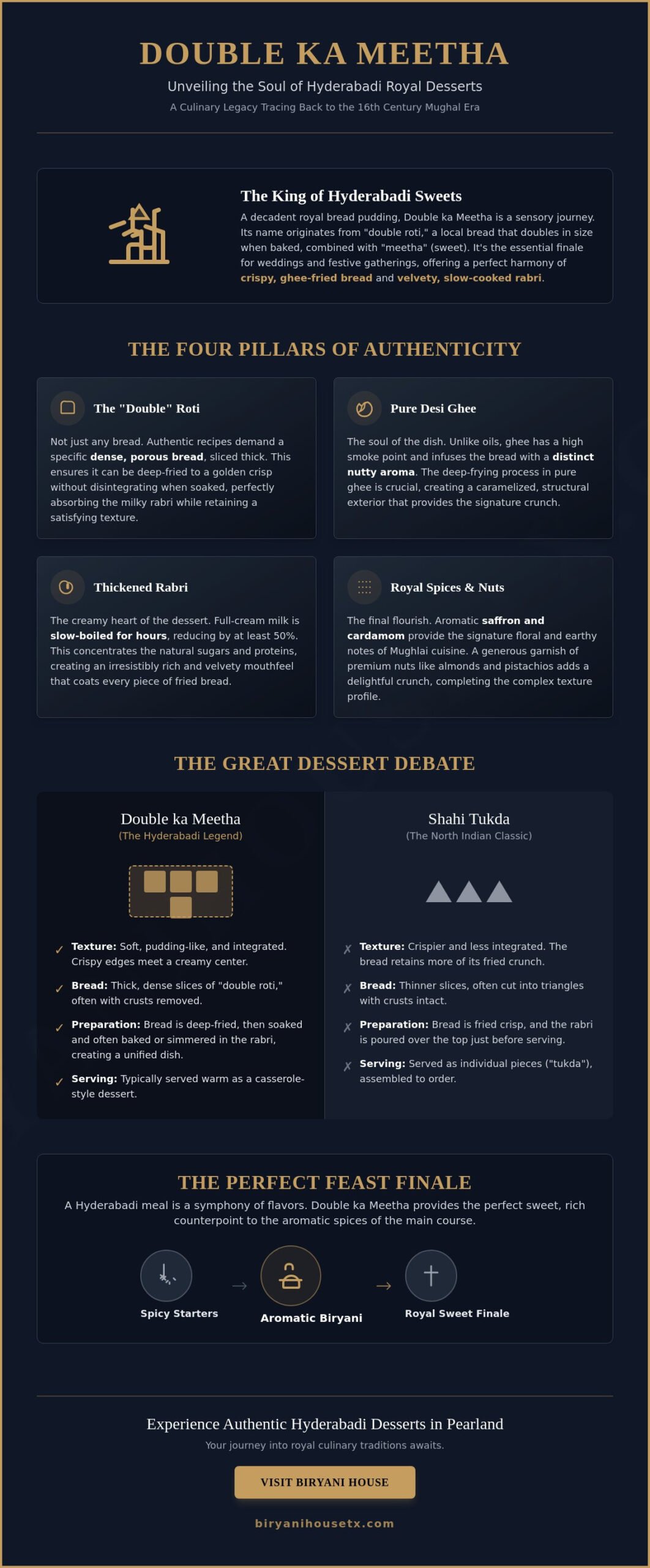
Authenticity starts with the bread. You can’t just use standard sandwich bread from a grocery store shelf. Authentic Double ka meetha requires a specific type of dense, porous bread that can withstand being deep-fried in pure desi ghee without falling apart. This frying process is crucial. It creates a nutty, caramelized exterior that provides a structural foundation for the dessert. When the bread is later soaked in thickened milk, it absorbs the liquid like a sponge but keeps its shape. Most homemade versions fail because thin, store-bought slices turn into a soggy mush. A true artisan knows that the bread must be handcrafted and sliced thick to ensure every bite offers that signature contrast between the crispy edges and the creamy center.
The Essential Ingredients of an Authentic Double Ka Meetha
Creating a masterpiece like Double ka meetha requires more than a simple recipe; it requires an understanding of how distinct, high-quality elements interact under heat and time. Every ingredient serves a specific purpose in building the layers of flavor that define this royal dessert. We don’t just use sugar and bread. We select components that carry the weight of tradition. The foundation of this dish rests on four pillars: thickened milk, pure ghee, aromatic spices, and premium nuts. When these four elements meet, the result is a dessert that feels like a warm embrace from a bygone era of hospitality.
Pure desi ghee acts as the soul of the dish. Unlike oils or butter, ghee has a high smoke point and a distinct nutty aroma that infuses the bread during the frying process. This isn’t a light toast. The bread is deep-fried until it reaches a deep amber color, ensuring it develops a structural integrity that withstands the upcoming soak. Following the frying, the bread meets the Rabri. This thickened milk is produced by slow-boiling full-cream milk until it reduces by at least 50 percent, concentrating the natural sugars and creating a velvety mouthfeel that coats the palate. If you’re craving these handcrafted flavors, you can experience the tradition firsthand with us in Pearland.
- Saffron and Cardamom: These are the aromatic heart of the dish, providing the floral and earthy notes that balance the heavy creaminess.
- Slivered Nuts: A mix of almonds, cashews, and pistachios adds a necessary crunch, breaking up the soft textures of the pudding.
- Khoya: Often added for extra richness, these dried milk solids provide a grainy, fudge-like contrast within the rabri.
The Role of Saffron in Mughlai Desserts
High-quality saffron is more than a spice; it’s a mark of royalty. In traditional Hyderabadi kitchens, we use hand-picked strands to provide both a delicate floral fragrance and a stunning orange-gold hue. This natural coloring transforms the bread pudding into a visual centerpiece. Saffron’s rarity and labor-intensive harvest have cemented its status as a luxury ingredient since the 16th century. Without it, the dish lacks the complex, lingering aftertaste that separates a standard sweet from a true royal Double ka meetha.
Achieving the Perfect Texture Balance
The hallmark of a perfectly prepared pudding is the “crisp on the outside, gooey on the inside” experience. This balance depends entirely on the timing of the milk absorption. The bread must be porous enough to soak up the saffron-infused syrup and rabri, yet it must retain enough of its ghee-fried crust to offer resistance to the spoon. We achieve this by slow-cooking the milk to a thick consistency before it ever touches the bread. This prevents the dessert from turning into a singular, mushy mass, ensuring every bite contains a variety of textures.
Double Ka Meetha vs. Shahi Tukda: What’s the Difference?
At first glance, you might think these two desserts are identical. They both feature golden-fried bread, aromatic milk, and a generous dusting of nuts. However, to a connoisseur of Hyderabadi cuisine, the differences are as distinct as the regions they come from. While both belong to the royal family of Mughlai bread puddings, they represent two different culinary philosophies. Double ka meetha is the pride of Hyderabad in the South, while Shahi Tukda traces its lineage to the imperial courts of Awadh and Delhi in the North. Understanding these nuances helps you appreciate the craftsmanship that goes into every bowl.
The most immediate difference is the bread preparation. In a traditional Hyderabadi kitchen, we use thick, hearty slices of “double roti” that often retain their crusts. This provides a substantial, rustic texture that can stand up to heavy soaking. Conversely, Shahi Tukda typically uses thin, delicate triangles of bread with the crusts carefully trimmed away. This results in a more refined, almost cake-like consistency. The soaking process also varies significantly:
- Double ka meetha: The bread is first soaked in a fragrant sugar syrup and then topped with a layer of thick rabri, creating a sweeter, syrup-heavy finish.
- Shahi Tukda: The bread is usually immersed directly into a pool of reduced milk, making it a milk-heavy dish with a softer, custard-like feel.
- Toppings: While both use nuts, Shahi Tukda is more likely to feature “vark,” or edible silver leaf, to emphasize its “Shahi” (royal) status.
Regional Variations Across India
As you move from the spice-rich landscapes of Telangana to the cooler plains of Uttar Pradesh, the dish evolves to suit local palates. The Hyderabadi version remains steadfast in its dedication to the “Double Roti” texture, ensuring the bread remains the star of the show. In Pearland, our community reflects this diversity. We find that guests often have deep emotional connections to one style or the other, depending on their family roots. However, the Hyderabadi version is particularly cherished for its ability to hold its own alongside the bold flavors of the Deccan plateau.
Which One Should You Choose?
Your choice depends on your preference for creaminess versus sweetness. If you want a dessert that’s rich and heavy on dairy, Shahi Tukda is a lovely choice. However, Double ka meetha is the superior choice after a heavy biryani. The syrup-based finish provides a refreshing contrast to the complex heat of the spices, cutting through the richness of the meal without overwhelming your palate with extra dairy. It’s the perfect, balanced end to a traditional feast that leaves you feeling satisfied rather than weighed down.
The Perfect Pairing: Completing Your Pearland Feast
A true Hyderabadi meal is a carefully orchestrated progression of flavors, designed to take your palate on a journey from fiery spice to cooling sweetness. To experience the full depth of this culinary tradition, you shouldn’t view dessert as an afterthought. Instead, think of it as the necessary resolution to a spicy narrative. We recommend beginning your feast with a vibrant starter like Chicken 65. Its bold, tangy heat wakes up your taste buds, preparing them for the complex layers of the main course. Following this with a steaming plate of Chicken Dum Biryani creates a crescendo of aromatic spices that defines the Deccan style of cooking.
This is where Double ka meetha plays its most vital role. After the intense heat of peppercorns, cloves, and chilies, your palate craves a soothing counterpoint. The milk-based richness and saffron-infused syrup act as a natural coolant, settling the spice and leaving a lingering sense of comfort. Maintaining Halal dining standards ensures that every element of this meal, from the succulent meats to the ghee-fried bread, adheres to the highest levels of purity and tradition. It’s this commitment to authenticity that transforms a simple dinner into a royal experience. If you’re ready to taste this harmony for yourself, come visit our Pearland kitchen to enjoy a complete, handcrafted feast.
The Biryani and Meetha Connection
In the grand dawats of Hyderabad, biryani and meetha are inseparable icons of hospitality. They share a common “Dum” cooking philosophy, where slow-cooking under pressure allows flavors to meld and intensify over several hours. This shared heritage creates a seamless transition from the savory rice to the sweet bread pudding. The fiery depth of the biryani finds its peaceful resolution in the cool, saffron-scented sweetness of the meetha. It’s a balance that has remained unchanged since the 16th century, providing a satisfying conclusion that stays with you long after the meal ends.
Dining in Pearland: A Local Culinary Journey
Pearland has rapidly established itself as a premier destination for authentic Indian food in the Greater Houston area. For residents in the 77584 zip code, these world-class flavors are no longer a distant luxury but a local staple. We encourage you to explore the full-course menu rather than settling for a single dish. Taking the time to sit down for a multi-course meal allows you to appreciate the rhythm of the spices and the craftsmanship of the kitchen. Whether you’re celebrating a family milestone or simply seeking the comfort of home-cooked flavors, the convenience of finding genuine Hyderabadi heritage in Pearland makes every visit special.
Experience Authentic Hyderabadi Desserts at Biryani House Pearland
Step inside our doors and leave the bustle of the modern world behind. At Biryani House Pearland, we’ve created a sanctuary where the rich traditions of Indian culinary arts are preserved with pride. You’re not just a customer here; you’re an honored guest in our home. We believe that a meal is a sacred exchange of hospitality and culture. This is why we maintain a strict policy of no pork, no beef, and no alcohol. We want every member of our diverse community to feel welcome and respected as they explore the authentic flavors of Hyderabad. We’ve become the local destination of choice for Indian desserts, offering a taste of the exotic without leaving the comfort of the 77584 zip code area.
Our Double ka meetha isn’t just a menu item; it’s a labor of love that represents the pinnacle of our dessert craftsmanship. We understand that the local community in Pearland seeks out these genuine flavors to celebrate life’s most important moments; this global appreciation for artisanal heritage is also why specialized offerings such as bird’s nest delivery singapore are sought after by those who value premium, freshly brewed traditional desserts. Since our establishment, we’ve remained committed to the slow-cooked methods that define our heritage. Every serving of our royal bread pudding is a testament to the patience required to create a truly authentic experience. It’s the golden, sweet conclusion that your palate deserves after a journey through our aromatic spices.
Our Handcrafted Approach
We treat our desserts with the same reverence as our signature slow-cooked biryanis. There are no shortcuts in our kitchen. Our chefs use handcrafted techniques passed down through generations to ensure every bite is perfect. We select only the freshest milk and premium spices to ensure the aromas are as vivid as they would be in a traditional Hyderabad kitchen. This dedication to craft is what makes our version of the dish stand out. It’s about the hours spent reducing the milk and the precision of frying the bread to that perfect amber glow. We believe that you can taste the difference that time and care make in every spoonful.
Visit Us in Pearland Today
Whether you’re looking for a quiet family dinner or a place to share large platters with friends, our Pearland location offers a warm, inviting atmosphere. We’ve designed our space to be family-friendly, encouraging the joy that comes from a shared, authentic meal. You can choose to dine in and enjoy the immediate aroma of our kitchen or take your treats to go for a special night at home. We invite you to view our full menu and plan your visit to Biryani House today. Experience the true taste of tradition and the warmth of our hospitality right here in your neighborhood.
Taste the Legacy of the Nizams
You’ve explored the 16th century roots of this royal pudding and learned why the specific “double roti” texture is essential for a true experience. You now know the difference between the syrup-heavy Hyderabadi style and its Northern counterparts. A bowl of authentic Double ka meetha is the only way to honor the complex spices of a traditional biryani feast. It’s the final, golden note in a symphony of flavors that has defined Deccani hospitality for generations.
Since 2018, we’ve had the honor of serving the Pearland community with handcrafted recipes that strictly follow Halal standards. Our family-friendly environment is designed to make you feel like an honored guest in a royal court. We invite you to Indulge in Authentic Hyderabadi Flavors at Biryani House Pearland and see how our slow-cooked methods transform simple ingredients into a legendary dessert. We look forward to welcoming you to our table for a taste of heritage that feels like home.
Frequently Asked Questions
Is Double ka meetha the same as Shahi Tukda?
No, they’re distinct regional variations. While both use fried bread and milk, Double ka meetha originates from Hyderabad and uses thick, crust-on “double roti” soaked in sugar syrup. Shahi Tukda comes from the North and typically features thinner, crustless triangles that are predominantly soaked in reduced milk for a softer, custard-like texture.
Is this dessert vegetarian-friendly?
Yes, this royal treat is 100 percent vegetarian. The traditional recipe consists of leavened bread, milk, sugar, pure desi ghee, and a variety of nuts. It contains no eggs or meat byproducts, making it an excellent choice for lacto-vegetarians looking for a rich, traditional Indian sweet.
How many calories are in a serving of Double ka meetha?
A standard 150-gram serving typically contains between 350 and 450 calories according to general nutritional databases. This caloric density comes from the handcrafted process of deep-frying the bread in ghee and slow-reducing the milk into thick rabri. It’s a decadent dessert meant to be savored during festive occasions and celebrations.
Can I find vegan Double ka meetha options?
Finding a truly authentic vegan version is quite difficult. The dish’s signature velvety mouthfeel depends on dairy milk solids and the nutty aroma of pure desi ghee. While some modern kitchens might experiment with coconut milk or plant-based oils, these substitutes often fail to replicate the traditional flavor profile that has defined this dish for centuries.
Why is it called ‘Double’ ka meetha instead of just bread pudding?
The name refers to “double roti,” which is the local term for bread that doubles in volume when it’s baked. Unlike standard Western bread puddings that use small cubes or scraps, this Hyderabadi version uses whole, thick slices of this specific bread. This ensures the dessert retains a substantial, royal texture that doesn’t turn into a simple mush.
What are the best nuts to use for garnishing this dish?
A traditional garnish uses a trio of slivered almonds, cashews, and pistachios. These three nuts provide a necessary crunch that contrasts beautifully with the soft, syrup-soaked bread. We often lightly toast these nuts before serving to release their natural oils and enhance the aromatic quality of the final presentation.
Is Double ka meetha served hot or cold?
It’s most traditionally served warm or at room temperature. Serving it warm ensures the ghee remains luscious and the saffron aroma is at its peak. Some people do enjoy it chilled, which gives the pudding a denser, more fudge-like consistency, but the warm version is the standard for a traditional Hyderabadi feast.
Where can I get authentic Hyderabadi Double ka meetha in Pearland, TX?
You can experience handcrafted Double ka meetha at Biryani House in Pearland. We’ve been serving the 77584 community since 2018, using slow-cooked methods and traditional recipes to ensure every guest feels like royalty. Our kitchen focuses on the authentic Deccan style, providing the perfect sweet conclusion to your spicy biryani meal.