Disclaimer
The information provided on this website is for general informational purposes only. While we strive to provide accurate culinary and nutritional details, we recommend consulting with a professional regarding specific dietary needs or food allergies. This site may contain affiliate links, meaning we may receive a commission if you make a purchase through our links at no extra cost to you
What if the secret to the perfect Indian starter isn’t just the heat of the spices, but the soul of the main ingredient? Choosing between the creamy indulgence of paneer and the earthy crunch of cauliflower is a delicious dilemma that every food lover faces at the table. It’s common to feel a bit of confusion over the legendary “65” name or worry that a dish might be too spicy for your guests. When you’re weighing the merits of Paneer 65 vs Gobi 65, the choice often comes down to whether you crave a velvety, protein-rich bite or a satisfying, golden texture that stays crisp until the very last morsel.
We believe in treating every reader like an honored guest by sharing the craftsmanship behind our kitchen’s traditions. In this guide, you’ll discover the essential differences in texture, flavor, and heritage that define these two beloved vegetarian appetizers. We’ll explore which dish pairs best with a fragrant Vegetable Dum Biryani and how we navigate the stricter 2026 food safety standards to ensure every bite is of artisanal quality. You’ll gain the confidence to order the perfect starter for your next gathering, ensuring a meal that feels both specialized and deeply comforting.
Key Takeaways
- Uncover the heritage behind the “65” name and the specific combination of tempered spices that gives these dishes their iconic, aromatic warmth.
- Learn how the “Sponge Effect” transforms paneer into a velvety delivery system for bold flavors and creamy, indulgent textures.
- Compare the sensory profiles of Paneer 65 vs Gobi 65 to decide if you prefer a rich, protein-based indulgence or a light, earthy crunch.
- Discover why the natural structure of cauliflower florets makes them the perfect vessel for catching and holding onto zesty masala coatings.
- Gain expert tips on pairing these spicy appetizers with cooling favorites like Mango Lassi and traditional Chicken Dum Biryani for a balanced feast.
The Legend of 65: What Makes These Appetizers Iconic?
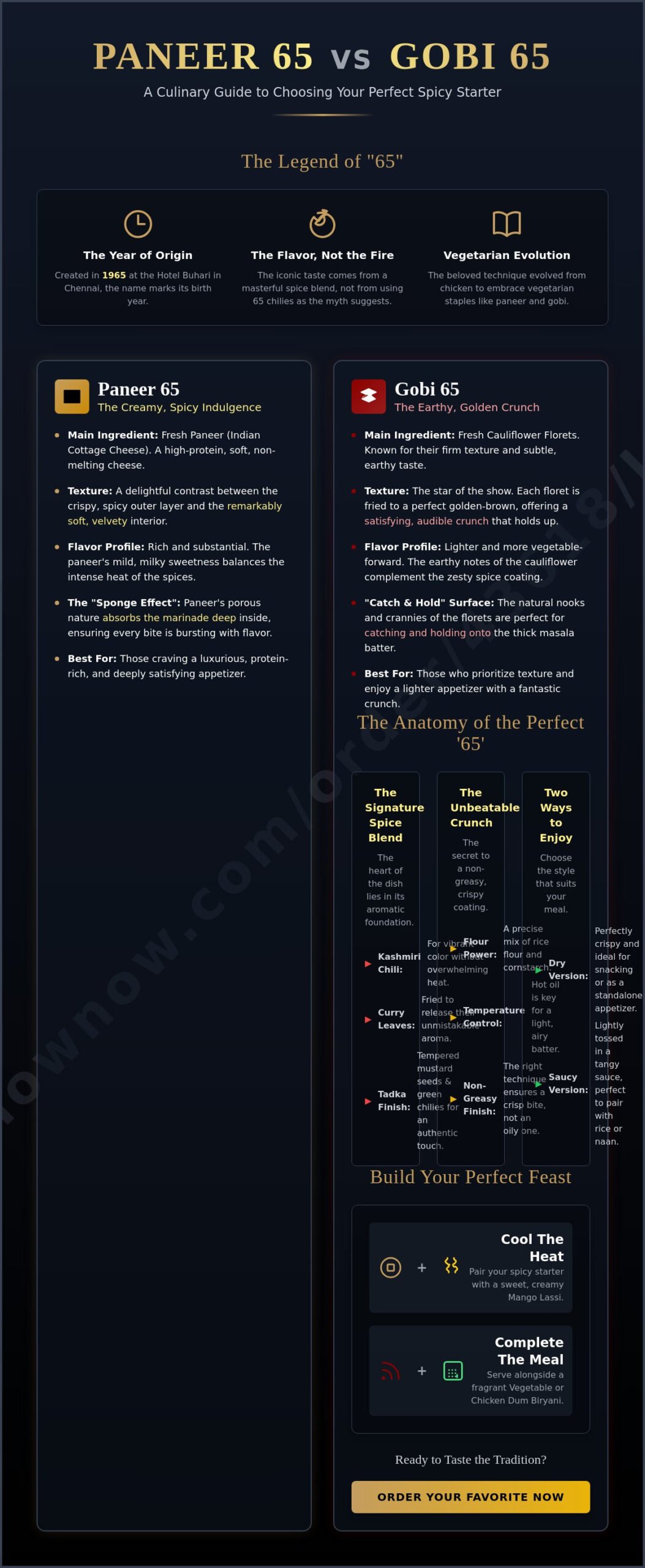
Every legendary dish has a story that connects us to our culinary roots. The “65” moniker is often shrouded in myths; some say it was the age of the chef who first made it, while others claim sixty-five chilies were used for every kilogram of meat. The truth is much simpler but no less special. Created at the Hotel Buhari in Chennai, The Legend of 65 dates back to 1965. When exploring the differences in Paneer 65 vs Gobi 65, it’s essential to understand that this specific year marked the birth of a flavor profile that would eventually define Indian street food and fine dining excellence alike.
As vegetarianism is deeply rooted in our shared heritage, the “65” style naturally evolved. It moved from the coastal kitchens of the South to every corner of the country. This transition allowed the same bold, fiery spirit to shine through different textures. Whether you are debating Paneer 65 vs Gobi 65 at your next family gathering, you are experiencing a technique that balances intense heat with aromatic freshness. A perfectly prepared dish hits you first with the scent of tempered spices. Then comes the sight of the vibrant crimson crust. Finally, the taste provides a complex layering of ginger, garlic, and yogurt-based tang that keeps you coming back for more.
To better understand the sensory differences and the craftsmanship involved in these variations, watch this helpful comparison:
The Anatomy of the 65 Spice Blend
The signature look of these appetizers comes from Kashmiri red chili powder. It provides that deep, inviting red color without overwhelming the palate with raw heat. This artisanal touch ensures the dish is approachable for everyone. Fresh curry leaves are the soul of the dish. They must be tossed in hot oil to release their essential oils; this creates a fragrance that defines the entire dining experience. The process ends with a “tadka” or tempering. This final step involves sizzling mustard seeds and green chilies, which adds a layer of historical legitimacy to every serving.
Texture: The Secret to a Non-Greasy Appetizer
Achieving the right crunch requires a precise mix of rice flour and cornstarch. This combination ensures a light, airy coating that doesn’t feel heavy or oily. Many traditional kitchens offer a choice between a “dry” version for snacking and a slightly “saucy” version that pairs beautifully with a meal. Temperature control is the master’s secret here. If the oil is too cool, the batter becomes soggy. If it’s too hot, the exterior burns before the inside is ready. This balance is what makes our Paneer 65 and Gobi 65 stand out as authentic, time-honored selections.
Paneer 65: The Gold Standard for Creamy, Spicy Indulgence
Paneer 65 is more than just a starter; it’s a study in sensory contrast. Imagine biting through a thin, fiery-red crust to find a heart that’s remarkably soft and velvety. This interplay between the crisp, spice-laden exterior and the creamy cottage cheese creates a moment of pure culinary joy. It’s the gold standard for guests who want an appetizer that feels substantial and indulgent. When you weigh the merits of Paneer 65 vs Gobi 65, the paneer version always stands out for its luxurious mouthfeel that lingers beautifully on the palate.
What truly sets this dish apart is the “Sponge Effect.” Unlike many vegetables that have a firm, natural barrier, paneer is porous and welcoming. It acts as a canvas, absorbing the tempered yogurt and the intricate spice mix deep into its fibers. This structural integrity ensures that every bite is bursting with flavor, not just on the surface but all the way through. It’s a technical feat of preparation that requires patience and a deep understanding of how fresh dairy interacts with high-heat spices.
For those seeking a high-protein vegetarian starter, this is the preferred choice. The subtle, milky sweetness of the fresh paneer provides a natural cooling counterpoint to the heat of the Kashmiri chilies and green peppers. It creates a balanced experience that doesn’t just provide heat; it offers nourishment and comfort.
The Art of Marinating Paneer
A yogurt-based marinade is essential because the lactic acid gently tenderizes the cheese without causing it to crumble. Timing is the secret to success here. If you marinate it for too long, the paneer can become rubbery; thirty minutes is often the perfect window to infuse flavor while maintaining a delicate, melt-in-your-mouth texture. To achieve the perfect balance of crunch and creaminess, each cube of paneer should be cut into precise one-inch squares to maximize the seasoned surface area.
Best Occasions for Ordering Paneer 65
This dish is a reliable crowd-pleaser, especially for guests who find the earthy notes of cauliflower a bit too forward. It’s a sophisticated choice that feels right at home in a halal dining experience, where quality and tradition are celebrated. The richness of the cheese also makes it a fantastic partner for milder side dishes like Garlic Naan or Dal Tadka. If you’re planning a family gathering and want a starter that everyone will love, you might consider adding Paneer 65 to your order to ensure a satisfying start to the feast.
Gobi 65: Celebrating the Earthy Crunch of Spiced Cauliflower
Gobi 65 stands as the ultimate gateway dish for those beginning their journey into the vibrant world of vegetarian Indian cuisine. It transforms the humble cauliflower into a star. While paneer offers a soft, dairy-rich indulgence, the cauliflower version provides a different kind of thrill. It’s the earthy, nutty soul of the vegetable that takes center stage here. When you compare Paneer 65 vs Gobi 65, the choice usually hinges on whether you crave the velvety bite of cheese or the satisfying, architectural crunch of a perfectly fried floret.
The structural advantage of cauliflower is undeniable. Its natural shape is a masterpiece of design for catching “masala.” The dense branches and tiny buds of the floret act as tiny traps for the spicy batter and tempered aromatics. This ensures that every single mouthful is a concentrated burst of flavor. It’s an intensely savory experience that celebrates the vegetable’s natural heritage while elevating it with artisanal spice-craft. Many of our guests choose this version specifically for that varied, rugged texture that paneer simply cannot replicate.
Achieving the Perfect Crunch
Craftsmanship begins with blanching. We briefly submerge the florets in boiling water to ensure the core is tender while the structure remains firm. This prevents the vegetable from becoming soggy during the frying process. Those intricate nooks and crannies we mentioned are then filled with a blend of rice flour and spices, creating a protective shell. Double-frying the florets at a high temperature is the essential secret to achieving that signature restaurant-style Gobi 65 shatter-crisp exterior.
A Lighter Alternative to Cheese
Gobi 65 offers a lighter, airier feel compared to the dense protein of paneer. It’s the perfect choice for guests who want a plant-forward starter that won’t leave them feeling overly full before the main course arrives. This lighter profile allows you to fully appreciate the complexities of authentic Indian food without the heaviness of dairy. It balances beautifully with a rich Mutton Dum Biryani or a bowl of Dal Tadka, providing a textural contrast that refreshes the palate between spoonfuls of rice and lentils. Choosing gobi means choosing a dish that feels both specialized and approachable.
Paneer 65 vs. Gobi 65: A Comparative Guide for Your Next Meal
Deciding between Paneer 65 vs Gobi 65 isn’t just about choosing an ingredient; it’s about selecting the mood for your entire meal. If you’re looking for a high-protein, calorie-dense start that feels like a full indulgence, paneer is your champion. It provides a substantial weight that satisfies deep hunger. Gobi offers a plant-forward, fiber-rich alternative that’s lighter on the stomach. This makes it an excellent choice if you’re planning to follow your appetizer with a hearty Mutton Dum Biryani. While both dishes share the same heritage of spices, their nutritional profiles cater to different cravings.
Travel and delivery quality, often called the “Soggy Factor,” is where these two diverge most significantly for our local guests. Paneer is the undisputed king of the journey. Even if the outer crust loses a bit of its initial shatter-crisp texture during delivery, the soft, velvety interior remains delightful. Cauliflower is more sensitive to time. It’s at its absolute peak the moment it leaves our artisanal kitchen. To enjoy that essential, earthy crunch, gobi is best eaten fresh at the table, whereas paneer holds its charm even after a short trip to your home.
Texture and Mouthfeel Comparison
This is the classic “Velvet vs. Snap” debate. Paneer offers a luxurious, soft core that contrasts beautifully with its spicy shell. The dairy naturally cools your tongue; it acts as a built-in buffer against the fiery Kashmiri chilies. Gobi provides a distinct, rugged snap. It’s an earthy crunch that feels lighter but demands your immediate attention. While paneer remains tender and consistent for longer, gobi offers a more dynamic, textural experience that celebrates the vegetable’s natural structure.
The Spice Absorption Test
You’ll often notice that Gobi 65 tastes “spicier” than its cheese-based cousin. This doesn’t happen because the sauce is different. It’s because the intricate, branching florets have significantly more surface area to trap the zesty masala and tempered aromatics. Paneer 65 offers a more “mellowed” heat experience. The milky sweetness of the cheese blends with the “65” sauce, creating a rounded, balanced flavor profile. The sauce enhances the natural nuttiness of the cauliflower, but it creates a bold, protective spicy shell around the mild paneer.
Ready to test the difference for yourself? You can order your favorite appetizer online and experience these time-honored flavors today. Whether you choose the creamy indulgence of cheese or the earthy snap of cauliflower, you’re in for a treat that honors our rich culinary traditions.
The Perfect Pairing: Integrating 65-Style Dishes into Your Feast
A truly memorable meal is all about balance and harmony. While we’ve explored the individual nuances of Paneer 65 vs Gobi 65, their real magic shines when they take their place alongside other traditional staples. These appetizers are the quintessential companion to a Chicken Dum Biryani. The fiery, zesty profile of the 65-style tempering provides a sharp, exciting contrast to the fragrant, slow-cooked layers of basmati rice and tender meat. It’s a combination that has stood the test of time in every hospitable Indian home.
Building a balanced vegetarian feast requires a similar eye for detail. If you’ve chosen the rich, velvety bite of Paneer 65, consider pairing it with the smoky, comforting notes of Dal Tadka and a basket of buttery Garlic Naan. The lentils provide a smooth, earthy base that lets the spiced appetizer pop. To manage the heat from the Kashmiri chilies and fresh green peppers, a chilled Mango Lassi is your best friend. The yogurt-based drink doesn’t just cool the palate; its fruity sweetness acts as a bridge between the spicy starters and the savory main course, ensuring you can enjoy every bite without fatigue.
This specific flavor profile is a cornerstone of authentic Hyderabadi cuisine. In our kitchen, we treat these recipes with the respect they deserve, focusing on the time-intensive preparation that defines our heritage. Whether you are hosting a small family gathering or a large community event, these dishes bring a sense of legitimacy and joy to the table. They aren’t just food; they’re an invitation to experience a culture that finds fulfillment in the satisfaction of its guests.
Biryani and 65: A Match Made in Hyderabad
The relationship between biryani and 65-style appetizers is built on textural contrast. You have the soft, aromatic rice that has spent hours absorbing flavors in a sealed pot. Then, you introduce the flash-fried, zesty crunch of the appetizer. The acidity from the yogurt and lemon in the 65 tempering is functional; it cuts through the richness of the biryani’s ghee and spices. When ordering for a group, we typically recommend one appetizer for every three guests to ensure everyone gets a generous taste of that signature crunch before the main course arrives.
Final Verdict: Your Seat at the Table
The debate between Paneer 65 vs Gobi 65 ultimately comes down to your personal preference for indulgence. Choose paneer when you want a high-protein, creamy, and substantial start that holds its heat beautifully. Reach for gobi when you crave a lighter, plant-forward snap that celebrates the earthy soul of the vegetable. Both dishes represent our commitment to artisanal quality and time-honored methods. Ready to taste the difference? Order your favorites here and let us welcome you into our culinary tradition.
Bring the Flavors of Hyderabad to Your Table
Finding your favorite between Paneer 65 vs Gobi 65 is a journey through two distinct textures. While one offers the velvety, protein-packed comfort of fresh cottage cheese, the other provides a rugged, earthy snap that only cauliflower can deliver. Both options honor the 1965 legacy with our time-honored spice blends and artisanal preparation. We maintain a strictly pork-free and beef-free kitchen to ensure a family-friendly atmosphere where every guest feels welcome. Our commitment to authentic Hyderabadi recipes means you’re experiencing genuine craftsmanship in every bite.
Experience the authentic flavors of Hyderabad. Order Paneer 65 and Gobi 65 now!
We’re eager to welcome you into our community and serve a meal that reflects our rich culinary heritage. Whether you’re gathering around our table or enjoying these favorites at home, these appetizers provide the perfect start to a memorable feast. Discover the quality and passion we put into every dish. Your place in our story is always reserved.
Frequently Asked Questions
What is the “65” in Paneer 65 and Gobi 65?
The “65” in these dishes refers to the year 1965, when the original recipe was created at the Hotel Buhari in Chennai. While many myths suggest it refers to the number of chilies or the age of the chef, the historical link to the year of its invention is the most widely accepted fact. This time-honored tradition has since evolved into the vegetarian variations we cherish today. It represents a legacy of craftsmanship we are proud to share.
Is Gobi 65 or Paneer 65 healthier?
Gobi 65 is generally considered the lighter option as it is plant-based and contains more fiber than its cheese-based counterpart. Paneer 65 offers a higher protein and calcium content, making it a more substantial, nutrient-dense choice for those looking for a protein boost. Both are deep-fried delicacies, so the best choice depends on whether you prefer a lighter vegetable base or a rich dairy protein to start your meal. We prepare both with fresh, high-quality ingredients.
Which dish is spicier, Paneer 65 or Gobi 65?
Gobi 65 often feels spicier because the cauliflower florets have a larger surface area to trap the zesty masala and tempered chilies. When comparing Paneer 65 vs Gobi 65, the paneer version typically offers a more mellow experience. The natural milkiness of the cheese acts as a buffer, softening the impact of the heat on your palate compared to the rugged, spice-catching structure of the cauliflower. Both provide a warm, aromatic heat that honors our culinary roots.
Can Gobi 65 be made vegan?
Gobi 65 can be made vegan by substituting the traditional yogurt in the marinade with a plant-based alternative or a splash of lemon juice for tang. The core ingredients of cauliflower and our artisanal spice blend are naturally plant-derived. Since it doesn’t rely on dairy like paneer, it’s a versatile choice for guests following a vegan lifestyle while still delivering that iconic, earthy crunch. We aim to treat every guest with hospitality by accommodating these specialized needs.
What is the best way to reheat Gobi 65 to keep it crispy?
The best way to restore the signature crunch to Gobi 65 is by using an air fryer or a conventional oven at 350 degrees Fahrenheit for about five minutes. Avoid the microwave, as it often makes the coating soggy and dampens the vibrant flavors. This gentle, dry heat helps crisp up the rice flour coating, ensuring the appetizer feels as fresh and specialized as it did when it first left our kitchen. It’s a simple way to enjoy heritage flavors at home.
Does Paneer 65 contain egg?
Our Paneer 65 is strictly vegetarian and does not contain egg in its preparation. We use a traditional combination of cornstarch, rice flour, and yogurt to create the spicy, golden crust that our guests love. This ensures the dish remains a perfect choice for those following a lacto-vegetarian diet while maintaining the legitimacy and historical nature of the recipe. We focus on the comfort and joy derived from sharing a meticulously prepared, culturally rooted meal for everyone.
What should I serve as a main course with these appetizers?
These appetizers pair beautifully with a fragrant Mutton Dum Biryani or a rich Chicken Tikka Masala for a complete feast. For a fully vegetarian experience, we recommend serving them alongside Dal Tadka and warm Garlic Naan. The bold, zesty profile of these starters prepares your palate for the deeper, complex flavors of our slow-cooked main courses and artisanal breads. Every bite is designed to offer comfort and joy to our honored guests.