Disclaimer
The information provided on this website is for general informational purposes only. While we strive to provide accurate culinary and nutritional details, we recommend consulting with a professional regarding specific dietary needs or food allergies. This site may contain affiliate links, meaning we may receive a commission if you make a purchase through our links at no extra cost to you
A true mutton biryani is never just a meal; it’s a slow-motion masterpiece where the bone-in meat dictates every note of flavor. If you’ve ever been disappointed by tough meat or spices that mask the soul of the dish, you aren’t alone. Many food enthusiasts searching for authentic mutton biryani Pearland have felt that same frustration. You’re looking for that perfect balance where the rice remains fluffy and the meat is tender enough to fall apart at the touch of a fork.
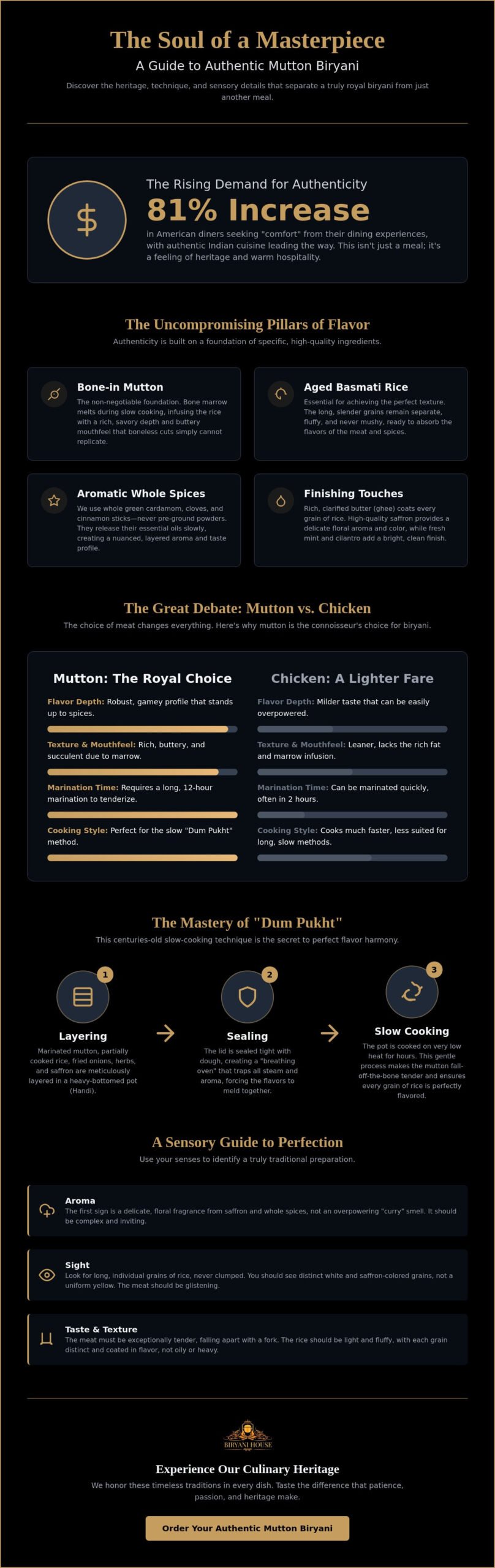
We understand that you’re seeking more than just a quick dinner. You’re looking for the deep comfort that an 81% increase in American diners now crave from Indian cuisine. It’s about the joy of a meticulously prepared, culturally rooted meal that feels like a warm welcome to an honored guest. In this guide, you’ll discover the secrets of the traditional Dum cooking method and why specific cuts of meat are vital for depth of flavor. We’ll show you how patience and heritage transform simple ingredients into a legendary experience that honors the timeless traditions of our kitchen.
Key Takeaways
- Learn why bone-in meat is the non-negotiable foundation for achieving the rich, marrow-infused depth found in royal preparations.
- Discover how to identify the best authentic mutton biryani Pearland by recognizing specific aromatic markers and rice textures.
- Understand the “Dum Pukht” technique, a centuries-old method of sealing flavors inside a breathing oven to ensure every bite is tender.
- Master the sensory cues of a perfect dish, ranging from the delicate floral notes of the spices to the individual, ghee-coated grains of rice.
- Explore the craftsmanship behind our Mutton Dum Biryani, where we prioritize the slow-cooking methods that honor our culinary heritage.
What Defines the Soul of Authentic Mutton Biryani?
To truly understand What Defines the Soul of Authentic Mutton Biryani?, you must look back to the opulent royal kitchens of South Asia. This dish wasn’t born from convenience; it was a creation of the elite, designed to satisfy the most demanding palates. It’s a complex, layered masterpiece that requires perfect timing and a deep respect for tradition. For those seeking authentic mutton biryani Pearland, the search begins with a respect for these historical roots. You aren’t just looking for rice and meat; you’re looking for a legacy. Authentic mutton biryani is a culinary harmony of slow-cooked, tender meat and fragrant, long-grain rice layered with the essence of time-honored spices.
The soul of this dish rests in the quality of the ingredients and the patience of the cook. A true biryani requires high-quality, bone-in mutton. We don’t use boneless pieces because the marrow is the secret to the dish’s success. As the meat slow-cooks, the marrow melts into the surrounding rice grains, creating a creamy, savory depth that poultry simply can’t match. This infusion is what separates a heritage dish from a basic meal. It relies on a delicate balance of long-grain Basmati rice, rich clarified butter (ghee), and a specific bouquet of whole spices. Each ingredient must be treated with care to ensure the flavors don’t mask the meat, but rather elevate it.
The Pillars of Traditional Flavor
Whole spices are the heartbeat of our preparation. We use green cardamom, whole cloves, and cinnamon sticks instead of dull, pre-ground powders. These spices release their oils slowly during the cooking process, ensuring a nuanced flavor profile. The quality of our saffron and the golden crunch of fried onions, known as birishta, are just as vital. They provide the unmistakable floral aroma and subtle sweetness that defines the dish. Fresh herbs like mint and cilantro are added at the very end to provide a bright, clean finish that cuts through the natural richness of the mutton and ghee.
A Heritage Beyond the Recipe
Biryani has always been more than just a recipe; it’s a complete, self-contained feast. Historically, it was the centerpiece of royal celebrations and special occasions. There’s a deep cultural significance in sharing a large, steaming pot of biryani with family and honored guests. It represents pure hospitality and the joy of community. Finding authentic mutton biryani Pearland that respects these traditions is a journey toward the heart of comfort. It’s a trend that’s growing, as “comfort” is the fastest-growing motivation for diners in the US, seeing an 81% increase in the past year. When you sit down to a meal with us, you’re stepping into the Biryani House heritage, where every plate is a tribute to the craftsmanship of our ancestors.
Mutton vs. Chicken: Why the Meat Choice Changes Everything
Welcome to our table, where we believe the choice of meat is the most important decision a chef can make. While chicken biryani is a beloved staple for many, it’s the mutton version that truly represents the pinnacle of our craft. Mutton possesses a robust, gamey profile that stands its ground against a heavy hand of spices. It doesn’t just sit alongside the rice; it transforms it. When you taste our authentic mutton biryani Pearland, you’ll notice how the fat from the meat has lacquered each grain of Basmati. This isn’t just oil; it’s the essence of the mutton itself, rendered down through hours of careful heat.
Bone-in cuts are the only way to achieve this level of flavor. The marrow acts as a natural flavor enhancer, providing a buttery mouthfeel that chicken simply lacks. If you’re looking for the deepest umami experience possible, mutton is the only answer. It’s a meat that demands respect and, most importantly, time. A Heritage of Flavor is built on this foundation of selecting the right meat to stand up to the long, intensive cooking process required for a truly royal dish.
The Marination Secret
Mutton is a stubborn meat. Its dense fibers require a gentle touch to break down effectively. We rely on traditional acidic tenderizers, specifically thick, tart yogurt and fresh raw papaya paste. These ingredients work slowly to soften the meat without turning it into mush. While some might settle for a quick two-hour soak, we know that a 12-hour marination is the only way to ensure the spices reach the very center of the bone. This patience is what allows the cardamom and cinnamon to weave their way through the meat, creating a flavor that is consistent from the first bite to the last.
Texture and Mouthfeel Comparison
The experience of eating a mutton biryani is tactile and evocative. You have the lightness of the rice grains, each one separate and distinct, paired against the succulent, heavy texture of the meat. It feels royal. It feels like a celebration. This substantial nature is why mutton remains the gold standard for special gatherings. For those who find themselves drawn to these deep, earthy flavors, we invite you to try our Goat Curry for a similar experience of meat cooked with the utmost care and respect for tradition. It’s a hearty alternative that captures the same spirit of slow-cooked excellence we bring to every authentic mutton biryani Pearland diners enjoy.
The Mastery of Dum: How Slow-Cooking Creates Flavor Harmony
The true magic of our kitchen happens behind a sealed lid. We practice the ancient art of Dum Pukht, a term that translates to “breathing oven.” This isn’t just a fancy way of saying slow-cooking; it’s a precise scientific process that transforms raw ingredients into a legendary meal. When preparing authentic mutton biryani Pearland families have come to love, the Dum method is non-negotiable. It involves sealing the cooking pot with a thick ribbon of fresh dough, creating a pressurized environment where no steam can escape. This seal traps the volatile oils from precious spices like star anise and mace, forcing those aromas back down into every individual grain of rice.
Mutton presents a unique challenge compared to chicken because of its higher fat content and denser structure. The Dum process is the only way to ensure the meat reaches its full potential. Dum cooking allows the meat to cook in its own juices, ensuring maximum tenderness while the fat renders slowly into the surrounding layers. This creates a flavor harmony that a standard stovetop boil simply cannot replicate. It’s a patient, time-intensive ritual that requires a master’s touch to get exactly right.
The Layering Technique
The architecture of a biryani pot is intentional. We place the marinated mutton at the very bottom, where it sits closest to the heat source. On top of this, we layer Basmati rice that has been carefully par-boiled. This “par-boiling” stage is perhaps the most difficult step for any chef to master. If the rice is too soft, the final dish becomes a mushy mess; if it’s too hard, it won’t absorb the mutton’s essence. The rising steam from the meat finishes the rice perfectly, leaving each grain distinct, long, and saturated with savory depth. It’s a delicate dance of heat and moisture that happens entirely out of sight.
The Seal of Purity
While many modern kitchens take shortcuts with aluminum foil, we remain committed to the traditional flour dough seal. This isn’t just for show. The dough reacts to the heat, expanding and hardening to create a natural, airtight barrier. This method ensures a halal-compliant, pure preparation where the ingredients are never contaminated by outside air or metallic tastes. The “reveal” is the most rewarding part of the day. When the seal is finally broken, a massive cloud of floral, meaty steam fills the room, signaling that the authentic mutton biryani Pearland diners expect is finally ready for the table. It’s a sensory experience that honors our heritage and rewards your patience.
A Sensory Guide to Spotting Truly Traditional Preparation
A plate of biryani is a sensory invitation. When you finally track down authentic mutton biryani Pearland, your nose will tell you first. The aroma should be a sophisticated blend of floral and earthy notes. It’s a far cry from the one-dimensional scent of “hot” spices. This bouquet is the result of whole spices and saffron working in tandem. If the fragrance doesn’t fill the room with a complex sweetness, the preparation likely lacked the traditional patience we’ve discussed. You’re looking for a scent that feels like a warm welcome, promising a meal that has been hours in the making.
Examine the rice grains next. They should be long, slender, and distinct. In a masterfully prepared dish, each grain stands alone, never clumped or mushy. A thin, glistening coat of ghee should cover the rice, providing a rich mouthfeel. The meat should be a highlight of texture. It needs to be succulent enough to pull apart with just your fingers, yet firm enough to hold its shape until that first bite. This delicate balance is the signature of a chef who understands the stubborn nature of bone-in mutton and knows exactly how to coax out its tenderness.
The Visual Test
Real saffron creates a mosaic of color on the plate. Look for white grains interspersed with natural shades of pale yellow and deep orange. This variation is a hallmark of authenticity. If the rice is a single, flat shade of neon orange, it’s likely just food dye. You should also spot whole peppercorns, cardamom pods, and cinnamon sticks. These are signs of a kitchen that values the slow release of flavor. Watch out for excess oil at the bottom of the dish. A greasy finish isn’t a sign of flavor; it’s often a sign of a rushed process that didn’t allow the fat to render and integrate correctly into the rice layers.
The Taste Profile
The taste should be a conversation between heat and harmony. Traditional spices should warm your throat, not overwhelm your palate with a sharp, stinging burn. You’ll taste the light tang of the yogurt marinade and the rich sweetness of caramelized onions, known as birishta. The ultimate test is the rice itself. Because of the Dum method, the rice should taste like the mutton even if you don’t have a piece of meat in that specific spoonful. If you’re looking to experience this level of craftsmanship, order our Mutton Dum Biryani today and see how we honor these sensory traditions in every pot we prepare.
Bringing the Biryani House Heritage to Your Table
At Biryani House, we don’t just see ourselves as a restaurant. We’re an institution of culinary tradition. Every order you place is an invitation into our home. We prepare our Mutton Dum Biryani with the exact patience and respect for heritage we’ve explored today. For those looking for authentic mutton biryani Pearland, we offer a seat at a table where history is served in every bowl. Our kitchen follows strict South Asian standards. This means we maintain a completely pork-free and beef-free environment. It’s a commitment to purity that ensures every guest feels respected, comfortable, and thoroughly nourished.
Your meal is a curated sensory journey. It begins with that first, intoxicating cloud of saffron and mutton steam as you open the lid. It continues through the tender, bone-in meat and fluffy, aromatic rice. It only truly concludes when you’ve used the last piece of our hand-stretched Garlic Naan to scoop up every remaining bit of flavor. We believe that a meal should be a moment of genuine comfort. It’s a chance to pause and appreciate the joy of a culturally rooted experience shared with friends or family.
A Family-Friendly Tradition
We’ve built our reputation on being a welcoming space for all. We provide a wholesome, alcohol-free environment where the focus remains entirely on the food and your company. While our mutton is legendary, our menu is incredibly diverse. You can explore the smoky depths of our Tandoori Shrimp or the vibrant, spicy kick of our vegetarian Gobi 65. We also offer favorites like Butter Chicken and Palak Paneer for those who want a varied feast. This range allows us to cater to every guest while staying true to the authentic taste of Hyderabad that defines our identity.
How to Join Our Table
We invite you to experience the “Science of Dum” firsthand. There’s no substitute for tasting the results of 12-hour marinations and sealed-pot slow-cooking. You don’t have to wait for a royal occasion to enjoy these time-honored flavors. We’ve made it simple to bring this heritage into your own dining room through our easy ordering platform. Whether you’re a local resident or a visiting food enthusiast, you’re now part of the Biryani House family. We look forward to sharing our passion and our authentic mutton biryani Pearland with you soon.
Taste the Legacy at Your Table
Real biryani isn’t just a recipe; it’s a slow-cooked ritual that requires time, patience, and deep respect for tradition. We’ve explored how the Dum Pukht method and bone-in mutton create a savory depth of flavor that defines a true culinary masterpiece. Since 2018, Biryani House has remained dedicated to these traditional Hyderabadi methods to ensure every guest experiences the legitimacy of our heritage. Our strictly pork-free and beef-free kitchen is focused on providing the most authentic mutton biryani Pearland has to offer.
Whether you’re drawn to our highly-rated Mutton Dum Biryani or the vibrant, spicy crunch of our Chicken 65, each dish serves as a tribute to artisanal craftsmanship. It’s time to move beyond the ordinary and embrace a meal that nourishes both the body and the soul. We invite you to join our community and share in the comfort of a time-honored feast that feels like home. Experience the heritage—order your authentic Mutton Dum Biryani now. We look forward to serving you a meal you won’t soon forget.
Frequently Asked Questions
What is the difference between Mutton Biryani and Goat Biryani?
In most South Asian culinary traditions, the term mutton specifically refers to goat meat rather than sheep. We use tender, high-quality goat for our preparations because it offers a leaner profile and a more robust flavor that stands up well to heavy spices. This choice ensures the meat remains succulent and flavorful after hours of slow-cooking, providing the traditional texture our guests expect from a heritage dish.
Is authentic mutton biryani supposed to be very spicy?
A true biryani is designed to be aromatic and flavorful rather than overwhelmingly hot. The goal is a delicate harmony of whole spices like cardamom, cloves, and cinnamon that provide a warm, complex profile. While we can certainly adjust the heat to suit your palate, the focus remains on the floral notes of saffron and the savory depth of the meat rather than a sharp, stinging burn.
How is Mutton Dum Biryani different from regular mutton biryani?
The primary difference lies in the “Dum” technique, where the cooking pot is sealed with a fresh dough ribbon to trap every bit of steam. Regular biryani might be cooked in an open pot or quickly steamed, which allows precious aromatic oils to escape. This traditional sealing process is what makes our authentic mutton biryani Pearland so incredibly tender and ensures the rice is deeply infused with the meat’s essence.
Can I order mutton biryani for large family gatherings or events?
Yes, we believe that biryani is the ultimate communal feast and we love helping you treat your family as honored guests. We provide portions that are perfect for sharing, whether you’re hosting an intimate dinner or a larger celebration. We recommend contacting us in advance for large events so our chefs can dedicate the necessary time and patience to crafting a perfect meal for your group.
What side dishes pair best with authentic mutton biryani?
We suggest pairing your biryani with a cooling raita or a tangy Mirchi Ka Salan to balance the rich profile of the mutton. These traditional sides are designed to cleanse the palate and enhance the earthy spices of the main dish. For a complete feast, many of our guests also enjoy starting with a plate of Chicken 65 or adding Garlic Naan to enjoy with the savory juices.
Why is the meat in authentic biryani served on the bone?
Serving meat on the bone is a non-negotiable requirement for achieving a deep, marrow-infused flavor. As the dish cooks slowly, the bone releases essential fats and minerals that create a buttery mouthfeel and a savory depth that boneless cuts cannot provide. This traditional approach is a key marker of the authentic mutton biryani Pearland enthusiasts seek out for a truly legitimate Hyderabadi experience.
What makes the Basmati rice in your biryani so fragrant?
We select premium, aged long-grain Basmati rice known for its naturally nutty aroma and slender texture. The fragrance is further elevated during the Dum process, where the rice absorbs the floral notes of saffron and the essential oils from whole spices. By par-boiling the rice to a precise level before layering, we ensure each grain stays fluffy, distinct, and saturated with the soul of the dish.
Is Biryani House a halal-certified restaurant?
Yes, we are proud to serve our community as a halal-compliant institution. Our kitchen follows strict standards for all our meat offerings, including our mutton and chicken, to ensure they meet traditional requirements. We also maintain a strictly pork-free and beef-free environment, allowing all our guests to dine with confidence and peace of mind while enjoying our meticulously prepared heritage flavors.