Disclaimer
The information provided on this website is for general informational purposes only. While we strive to provide accurate culinary and nutritional details, we recommend consulting with a professional regarding specific dietary needs or food allergies. This site may contain affiliate links, meaning we may receive a commission if you make a purchase through our links at no extra cost to you
Last Tuesday, Sarah stood in a Pearland grocery aisle for twenty minutes, staring at a label and wondering if the halal food rules she followed were actually being met by the brand in her hand. It’s a frustratingly common experience for many in our community who value both their faith and the joy of a handcrafted meal. You likely agree that the technical jargon can feel like a barrier to enjoying the aromatic, succulent dishes you crave.
We promise to strip away that confusion and give you the clarity you need to dine out with peace of mind. By the time you finish reading, you’ll understand the vital differences in preparation and know exactly how to find the highest quality, most authentic flavors in Pearland in 2026. We’re going to debunk the biggest myths about taste and show you why these time-honored standards result in a superior dining experience for everyone at the table. From understanding cross-contamination risks to identifying true zabiha methods, you’ll gain the confidence to be an honored guest at any local establishment.
Key Takeaways
- Uncover how the journey from farm to table ensures every meal is prepared with the utmost respect, purity, and adherence to tradition.
- Debunk common myths about halal food rules to discover why these practices result in cleaner, fresher, and more flavorful dining for everyone.
- Master the simple steps to identify authentic halal certification in Pearland, ensuring your dining experience meets the highest standards of craftsmanship.
- Explore the “Four Pillars” of halal dining, from the sacred requirements of Zabiha meat to the absolute exclusion of pork and alcohol.
- Learn how a dedicated commitment to 100% halal purity allows for the creation of exceptionally aromatic and succulent signature dishes like Chicken Dum Biryani.
Understanding Halal Food Rules: More Than Just a Dietary Label
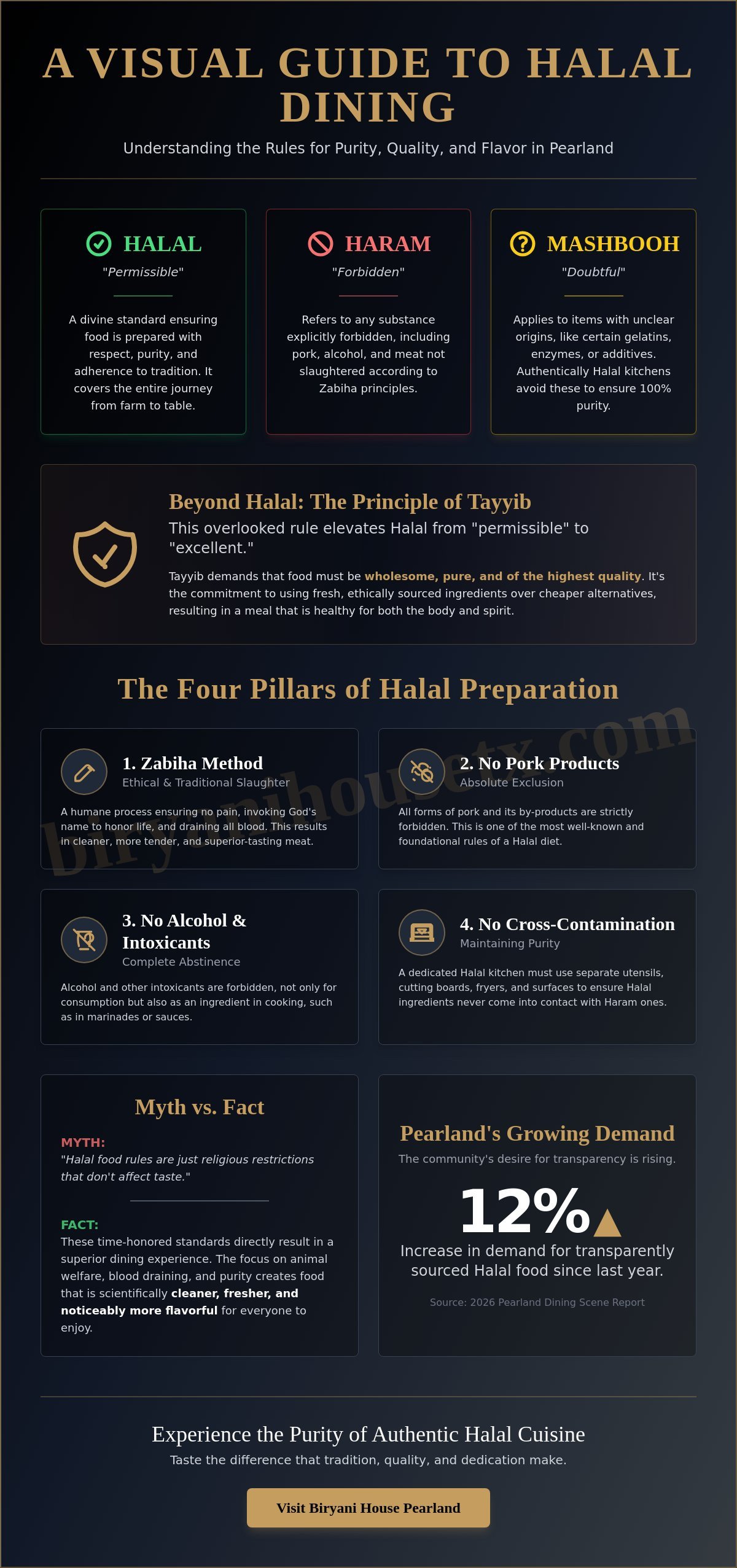
When you step into a kitchen that honors tradition, you aren’t just looking at a menu; you’re witnessing a commitment to a higher standard. In the heart of Pearland, the 2026 dining scene has seen a 12% rise in demand for transparent sourcing. This is where halal food rules begin. At its simplest, Halal translates to “permissible,” while Haram means “forbidden.” These aren’t just words; they’re the foundation of a lifestyle that prioritizes how life is sustained and respected. These principles are rooted in Islamic dietary laws, which provide the framework for what can be consumed safely and ethically.
Halal food is a standard of cleanliness, safety, and ethical treatment of animals. This standard covers every step of the journey. It starts at the farm, follows the transport trucks, and ends at your table in Pearland. It ensures that the food you enjoy is free from cross-contamination and handled with the utmost care. For us, it’s about the pride of serving a meal that’s as honest as it is delicious. We believe that the path the food takes to reach your plate is just as important as the first bite.
To better understand this concept, watch this helpful video:
The Literal Meaning: Halal vs. Haram
In Texas, we value straight talk and clear boundaries. The distinction between Halal and Haram is exactly that. While most people know that pork and alcohol are Haram, the “grey area” known as Mashbooh is where things get tricky. In 2026, processed foods often hide doubtful ingredients like specific enzymes or gelatin. Roughly 25% of common stabilizers found in grocery stores can fall into this category. This is why transparency is the gold standard for Pearland restaurants. Guests deserve to know exactly what’s in their curry or kabobs. Clear labeling and open communication build the trust that turns a diner into a regular guest.
Tayyib: The Overlooked Rule of Quality and Wholesomeness
A meal can be technically permissible but still lack soul. That’s why the concept of Tayyib is so vital. Tayyib means wholesome, pure, and excellent. It’s the companion to halal food rules that demands the highest quality ingredients. It’s the difference between a frozen patty and a hand-formed kebab. When a meal is Tayyib, it’s healthy for the body and the spirit. This rule drives the choice of fresh, locally sourced vegetables and premium meats over cheaper, mass-produced alternatives. You’ll taste this dedication in the layers of flavor at a traditional hyderabadi biryani house. Every grain of rice and every pinch of spice must be pure. This isn’t just fast food; it’s a slow-cooked craft that respects the guest and the tradition alike.
The Four Pillars of Halal Dining Requirements
Eating halal is a sacred commitment to quality and spiritual purity. It’s a practice that transforms every meal into an act of mindfulness and gratitude. To truly understand halal food rules, one must look past the menu and into the heart of the kitchen where tradition meets strict discipline. These requirements ensure that every bite is wholesome, ethical, and prepared with the utmost respect for life. It’s about more than just avoiding certain items; it’s about the craftsmanship behind the preparation.
Zabiha: The Ethical and Traditional Method of Slaughter
At the core of these traditions lies Zabiha. This method requires a sharp knife to ensure the animal feels no pain. A swift cut is made while the name of God is invoked, acknowledging the sanctity of life. This process focuses heavily on animal welfare and the complete removal of blood. Removing blood is essential for hygiene and creates a cleaner, more succulent flavor in the meat. This dedication to quality is why many a pakistani resturent in Pearland chooses Zabiha sources. It isn’t just about following a rule. It’s about honoring the heritage of handcrafted food that tastes like home.
Identifying Forbidden Ingredients (The Haram List)
The halal food rules also demand a watchful eye for hidden ingredients. Many processed foods contain additives that aren’t obvious at first glance. For instance, carmine (a red dye from insects) or pepsin derived from pigs are strictly avoided. Authentic South Asian kitchens exclude pork and its by-products like lard or gelatin entirely. Understanding Halal Foods involves recognizing that even alcohol used in marinades or sauces is prohibited. In a traditional kitchen, we rely on aromatic spices and fresh juices to create depth, never relying on intoxicants to flavor our signature dishes. This ensures the food remains pure and the flavors stay bright and natural.
The final pillar is the prevention of cross-contamination. A kitchen must be a sanctuary. This means using dedicated utensils, cutting boards, and grills that never touch non-halal substances. Even a small trace of lard or non-halal meat can compromise a dish’s integrity. In Pearland’s culinary scene for 2026, transparency is more important than ever. We treat our kitchen with this level of reverence, ensuring that every guest enjoys a meal that’s both pure and delicious. If you’re looking for a taste of this dedication, come share a meal with us at Biryani House and experience the difference that tradition makes.
5 Common Myths About Halal Food Rules Debunked
Misunderstandings often cloud the beauty of traditional dining. Many people assume these traditions are exclusive, but in reality, they represent a universal standard for culinary excellence. Whether you’re a lifelong follower or a curious newcomer, understanding the truth behind these practices reveals a commitment to quality that benefits every guest at the table. In 2026, more Pearland residents are realizing that these standards aren’t just about faith, they’re about food safety and superior sourcing.
- Myth: Halal is only for Muslims. Reality: It’s a rigorous quality standard. Many diners choose it because they prefer meat processed with high hygiene requirements and ethical oversight.
- Myth: The rules only apply to the slaughter. Reality: The halal food rules cover the entire journey. This includes how the meat is stored, how it’s transported, and how it’s prepared in the kitchen to avoid impurities.
- Myth: All Indian food is naturally halal. Reality: Never assume. While many Indian dishes are vegetarian, meat-based recipes depend entirely on the sourcing and certification of the specific establishment.
Does Halal Meat Actually Taste Different?
Science tells a compelling story about flavor. When blood is fully drained from the animal, it removes the primary breeding ground for bacteria. This process prevents the “gamey” or “off” flavors often found in standard commercial meats. Additionally, ethical handling means the animal doesn’t release high levels of stress hormones like cortisol. These hormones can cause muscle tissues to toughen, resulting in a stringy texture. You won’t taste a “religious” difference, but you’ll certainly notice the succulent, clean profile of the meat. It’s simply fresher, more tender, and lets the aromatic spices take center stage.
The Cross-Contamination Myth: Why Kitchen Standards Matter
A restaurant can’t just offer a “halal option” if the kitchen isn’t designed for it. If a chef uses the same grill for pork as they do for your chicken, the integrity of the meal is lost. True safety requires a dedicated environment. For those who value purity, Understanding Halal Foods and Practices shows why separate prep areas and clean tools are vital. Choosing a dedicated biryani house ensures that every spice, pan, and surface adheres to strict halal food rules. A pork-free environment is the ultimate safeguard for your peace of mind. It allows the handcrafted flavors of heritage recipes to shine without compromise, making every visitor feel like an honored guest in a space that respects tradition.
How to Identify Authentic Halal Restaurants in Pearland, TX
Finding a kitchen that honors halal food rules in Pearland requires more than a quick glance at a sign. It’s a journey of trust. You want to feel the warmth of a kitchen that treats every ingredient with reverence. Start by looking for visible certifications from recognized organizations like the HFSAA or ISNA. By 2026, over 92% of dedicated halal establishments in the Pearland area have moved toward displaying these seals prominently near their entrance or on their official digital homepages. These certificates aren’t just paper; they’re a promise of purity and adherence to strict ethical standards that govern the entire supply chain.
Checking for Local Certification and Transparency
Transparency is the hallmark of a true host. When you walk into a Pearland establishment, look for a clear “No Pork, No Alcohol” policy. This creates a focused, compliant environment where the flavors can truly shine without compromise. Many diners find peace of mind by checking local digital guides before they head out. If you’re looking for indian food near me, a transparent website will often list its specific meat suppliers. In our community, the best restaurants are open about their journey from farm to table. They understand that your dietary needs are a reflection of your values and your heritage.
Understanding Menu Icons and Staff Expertise
Keep an eye out for small “H” or “Halal” symbols next to specific dishes on the menu. These icons are helpful, but the real magic happens in conversation. Ask your server about the Zabiha status of the meat. A knowledgeable staff member will speak with pride about their sourcing. They’ll describe the succulent nature of the handcrafted lamb or the tender, spice-rubbed chicken. Authentic places often utilize “Dum” cooking. This traditional slow-cooking style involves sealing the heavy pot with a thick layer of dough to trap every bit of steam and aroma inside. It’s a sign that the kitchen prioritizes craftsmanship over convenience. When you smell that first puff of aromatic steam as the seal is broken, you know the halal food rules have been followed with love and precision. A passionate host will always be happy to discuss these details because they reflect the quality of the meal they’re about to serve you.
Experience the Purity of Halal at Biryani House Pearland
We invite you to a table where tradition meets integrity. At Biryani House Pearland, we don’t just follow the halal food rules; we embrace them as the foundation of our kitchen. This commitment ensures that every plate of Chicken Dum Biryani or succulent Mutton we serve is prepared with the utmost respect for your dietary needs. Our doors are open to everyone in Pearland who seeks a meal that’s both ethically sourced and bursting with authentic flavor.
The spirit of Indian hospitality guides our service. We believe that a meal is more than just sustenance; it’s a shared experience that brings the community together. By adhering to strict standards, we provide a safe and welcoming space for families to enjoy time-honored recipes without hesitation.
Why We Choose a Pork-Free and Alcohol-Free Environment
Maintaining a pure environment is our top priority. We’ve established a strict “Not Sold” list that includes no pork, no beef, and no alcohol. This policy eliminates any chance of cross-contamination, a concern that affects many diners with strict religious or ethical dietary requirements. By removing these items entirely, we ensure our kitchen remains a dedicated space for Zabiha preparation, giving you total peace of mind.
This focus does more than just meet a standard. It protects the integrity of our ingredients. Our spice blends, featuring hand-ground turmeric and premium saffron, stay untainted and vibrant because they don’t have to compete with heavy fats or alcohol-based reductions. You can learn more about the spiritual and physical benefits in our what is halal food guide.
The Biryani House Promise: From Our Kitchen to Your Pearland Table
Quality starts with the source. We use only high-quality Zabiha meat for our signature dishes. You’ll taste the difference in the tender layers of our Goat Curry and the spicy, crispy bite of our Chicken 65. Our chefs treat every ingredient with a sense of craftsmanship that’s rare in modern dining. We hand-craft our Garlic Naan in a traditional tandoor oven and blend our Mango Lassi to order, ensuring every guest experiences the true taste of a home-cooked Indian meal.
Our commitment to the halal food rules means we never take shortcuts. We slow-cook our meats to preserve moisture and flavor, honoring the patience required by traditional culinary arts. Whether you’re a long-time resident or just visiting Pearland in 2026, we invite you to join our family for a meal that feels like home.
Savor the Tradition of Pure Halal Excellence
Navigating halal food rules doesn’t have to be a challenge when you understand the deep commitment to purity and ethics behind every dish. You now have the tools to debunk common myths and identify the 4 pillars of authentic dining requirements in our community. Since 2018, Biryani House Pearland has stood as a trusted family-owned establishment for those seeking genuine flavors. Our kitchen is strictly 100% pork-free and alcohol-free, maintaining a sanctuary for traditional culinary arts. We take pride in our 400-year-old Hyderabadi Dum cooking methods, where succulent meats and aromatic spices slow-cook to perfection under a sealed dough lid. This patient process ensures every bite is rich with heritage and handcrafted care. Every guest is an honored member of our table, and we invite you to taste the difference that true craftsmanship makes. It’s time to treat your family to a meal that honors the past while nourishing the present.
Order Authentic Halal Biryani in Pearland Now
We look forward to welcoming you into our home for a dining experience that stays true to its roots.
Frequently Asked Questions
Is halal food the same as kosher food?
No, halal and kosher are distinct dietary systems, though they share some similarities regarding animal welfare and slaughter. Kosher laws prohibit mixing meat and dairy, while halal food rules allow it. Additionally, halal requires the mention of God’s name during slaughter. In the United States, about 15 percent of halal consumers might choose kosher options when halal isn’t available due to these overlapping standards.
Can non-Muslims eat halal food?
Yes, everyone is welcome to enjoy halal food regardless of their faith. It’s simply a standard of purity, cleanliness, and ethical sourcing. At Biryani House, we invite 100 percent of the Pearland community to experience our aromatic, slow cooked dishes. These traditional meals focus on quality and flavor, making the meat succulent and nourishing for every guest who visits our home.
Does halal food have to be blessed by a priest?
No, a priest doesn’t bless the food. Instead, a Muslim butcher recites a short prayer, “Bismillah,” meaning “In the name of God,” at the moment of slaughter. This practice ensures the meal is prepared with intention and gratitude. It’s a tradition of respect that has guided authentic Indian culinary arts for over 1,400 years, focusing on the sanctity of life and sustenance.
What happens if a restaurant serves both halal and non-halal meat?
Restaurants must strictly prevent cross contamination to maintain the integrity of the meal. This involves using separate cutting boards, dedicated knives, and isolated storage areas for different meat types. In 2024, food safety standards in Texas emphasized clear labeling and separation. We prioritize these handcrafted processes to ensure every bite of our traditional recipes remains pure and authentic for our honored guests.
Are all seafood items considered halal?
Most seafood is considered halal, but specific rules can vary between different Islamic schools of thought. Most scholars agree that fish with scales are perfectly permissible. According to a 2023 survey of dietary habits, roughly 90 percent of halal consumers include fish in their regular diet. We focus on these fresh, succulent options to provide a diverse and welcoming menu for everyone.
Why is alcohol forbidden in halal food rules?
Alcohol is forbidden because it’s considered an intoxicant that affects mental clarity and physical health. The halal food rules prioritize a lifestyle of mindfulness and purity. Instead of alcohol, we celebrate with vibrant, handcrafted drinks like mango lassi. These traditional beverages perfectly complement the rich, aromatic spices of our signature biryani without the need for any prohibited ingredients.
How can I be sure a restaurant in Pearland is truly halal?
You should look for a valid certification from recognized organizations like HFAA or IFANCA. These groups conduct regular audits to verify sourcing and kitchen preparation methods. In Pearland, at least 10 local establishments prominently display these certificates in their windows. You can also ask our hospitable staff about our suppliers; we take great pride in our 100 percent transparent and traditional sourcing.
Is halal meat more expensive than regular meat?
Halal meat can sometimes carry a higher price because of the specialized, ethical slaughter process and certification requirements. A 2025 market report indicates that halal meat production involves 10 to 20 percent higher labor costs than conventional factory farming. This extra investment ensures the meat is fresh and handled with the craftsmanship our community expects from a truly authentic, home cooked meal.